Written Interviews
AGOS Newspaper | On 'Give Me a Lighter' at Golden Apricot Film Festival (2019)
FULL INTERVIEW
Gökhan Kaya in the Competition of Golden Apricot
Interviewer: Lusyen Kopar (AGOS Newspaper)
Date: 29.06.2019
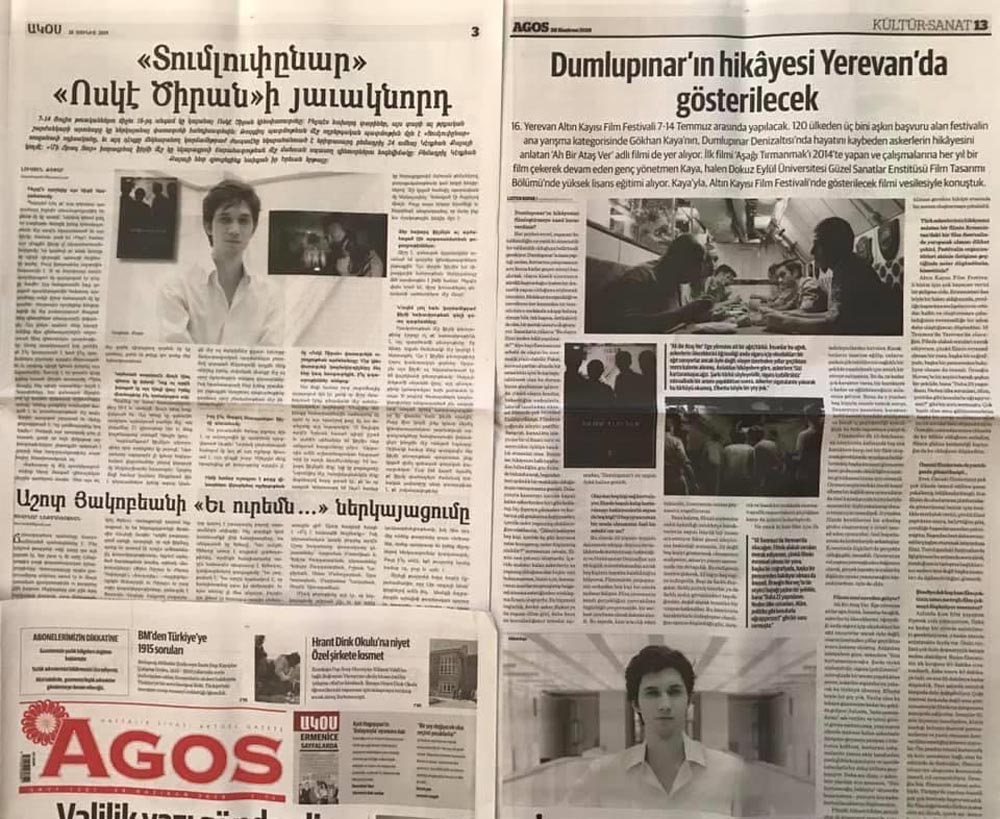
Golden Apricot International Film Festival, which will be held in Yerevan between July 7-14 and is shown as one of the most important film organizations in the world, opens its curtains for the 16th time this year. Gökhan Kaya's film "Give Me a Lighter" (Ah Bir Ataş Ver) is also in the main competition category of the festival, which received over 3000 applications from 120 countries. We talked to Kaya on the occasion of his film to be screened at the Golden Apricot Film Festival.
Lusyen Kopar: Why did you choose this story?
Gökhan Kaya: First of all, it must be stated that this misfortune experienced is unfortunately a cinematic misfortune. If we base it on the time from the moment Dumlupınar had the accident until the last moment of the rescue operation, it is possible to say that the event has a dramatic structure of the kind that classical cinema constantly resorts to. The inorganicity of the space and the situation of a representative from almost every segment being stuck in that space alone succeeds in creating an element of curiosity, even if superficial. The reason why people have been lamenting for years asking "why haven't they made a movie about this event yet" might stem from this cinematic state of the event I'm trying to mention. Under normal conditions, we thought this situation, which makes a screenwriter's job quite easy, was against us. Because this lived event had been filmed mentally by the audience long ago due to the reasons we mentioned. In most films, the audience is passive. The screenwriter gives a flashlight to the audience in the dark and asks the audience to witness the story. However, when we consider that the story is a story known by the public, we must assume that we have been in a bright place from the beginning. For this reason, we used the camera like one of the soldiers trapped inside, and focused on what might have happened inside without ever going out and referring to the rescue efforts. The answer to the question "what did 5 people waiting for death talk about or think about for 3 days inside?" formed our main framework. In the lived event, there is no data on what the trapped soldiers experienced. This situation also created an opportunity for us to expand the boundaries of fiction and move away from documentary cinema aesthetics. The formal freedom we gained as a result made the Dumlupınar story the most suitable story for these topics we had been tampering with before, such as the state-soldier relationship or life-death.
L.K: In the real event, the number of survivors is 5, and in the film, we see 5 people trapped waiting to be rescued. Why 5 people? And is there a special reason for those 5 actors to be together?
G.K: We know that in this event, 22 people were trapped in the torpedo compartment waiting to be rescued in the depths of the sea, and at the end of the tragedy experienced, only 5 people out of the 88 crew members of the Dumlupınar submarine survived. In our film, as you said, 5 people are trapped in a room after the collision. At this point, the film, written as a loose adaptation, relies on cinema's freedom to create its own reality. In this way, we prevent this story acting as an intermediary for us from getting ahead of the proposition.
In my opinion, as long as one remains faithful to the discourse of the film, the number of characters does not matter much, but we also carried the anxiety and concern of showing 5 people instead of 22, in the sense expected by the general audience, during the scriptwriting phase. Going over this anxiety, we reduced 22 people to 5 in a concentrated way. Since all 5 possess a different emotion or political attitude or, to put it crudely, a different intellectual appearance, they naturally undertook a representative mission. This significantly shortened the audience's share of identification with the characters, and also made our job easier against the difficulty of cinematographic maneuvers in a narrow and flat space.
Also, unfortunately, one of the first determinants for a short film is duration. Meaning, you have a certain time to lean on the characters and make their psychological analyses in a healthy way. This means the more characters there are, the less you can lean on a character. That's why we kept it limited to 5 people a bit. The 22 people issue is problematic in this respect. While writing the script, we tried to close this gap with the transformation of the characters over time and their internal permeability.
Regarding the choice of actors, in the first 10 minutes of our film, a clear idea had to be formed in the audience's mind against the 5 main characters, and it was essential for us that this group of privates, who saw nothing but each other for months, looked as sincere as possible. This was not the primary condition in casting, of course, but it was important for us that the actors had caught a sincere relationship with each other in their private lives as well. That's why the actors representing those privates who formed a group of friends in the film are also friends with each other in their private lives. They have a distant relationship with the Commander, just as in reality. Independent of the actor's ability to act, I felt that this relationship established in real life would reflect on the play, and I can say that indeed it did.
L.K: Where does the name of the film come from?
G.K: "Ah Bir Ataş Ver" (Give Me a Lighter) is actually a lament/folk song belonging to the Aegean Region. The name comes from there. However, contrary to what is believed, it is not a lament that the soldiers smoked and sang the moment they learned they would die; it is a lament written years after the event. According to the stories told, after an announcement made to the soldiers along the lines of "we won't be able to save you, you can sing songs, you can smoke," it is said that the soldiers lit their cigarettes and sang this folk song. Of course, there is no such thing. Just like the Mandela effect, this wrong story comes to the present day in this way. Actually, the mechanism called the sunken buoy which acts as a radio, meaning the cable of that phone used to communicate with the soldiers trapped underwater, is accidentally broken by the rescue team and contact cannot be established with those inside again. What is more painful is that the last announcement made as a result of the contact established with those soldiers was "wait, we will save you," in my opinion. Meaning, they thought they would be saved until the last moment they died.
At this stage, we tried to create a common synthesis in the distinction between the known story, the real event, and the story that needs to be told in the cinematic universe.
L.K: We had interviewed you before for your film named "Haşa". Which film of yours is this, and what is the status of your films' adventure?
G.K: 'Give Me a Lighter' became our fifth film. After Haşa, we had made another film named "The Trial of a Film". If I include 'Give Me a Lighter' too, our films had the chance to be represented in many countries and were awarded. This is also pleasing for this film because after making the film, I was afraid it would be confined to a certain locality. I wanted to place it on a more universal line from the beginning. Seeing interest in festivals abroad made me happy in this sense; it showed that the discussion topics we put forward concerned not only us but other people as well.
L.K: I heard that you will compete in the Golden Apricot Film Festival and I was very touched. Frankly, it is very interesting that the story of a Turkish soldier competes in Armenia. What did you feel? When are you going to Armenia?
G.K: Golden Apricot Film Festival was a very exciting development for us. When we received such news from Armenia, as I just said, our worries about being trapped in locality disappeared, and I thought we reached one step closer to the universality we were trying to create. I will be in Yerevan on July 10th, and I am curious about the questions coming about the film because aside from the film being universal, looking from another window in another geography is also an inevitable situation. For example, a viewer in Norway asked me in quite a surprise, "You are only 23 years old, why do you deal with subjects like country problems, death, politics?". Questions like these, which are very simple but to which I can give no answer other than smiling, make me think. For example, after that question, I understood that death is also a culture. Actually, I thought this was the source the film secretly fed on.
L.K: Why always short films? Do you think about shooting a feature film?
G.K: Actually, I don't set out saying let me make a short film. Whatever duration the story requires to be told in, it is beneficial to tell it in that duration. The other way can cause too many dramaturgical errors. The first cut of our film was around 60 minutes, later we reduced it to 40 minutes and finally to 30 minutes. So actually, the direction of this can change even in editing. Also here, one shouldn't get carried away by the mystery of the "medium". Most festivals are not aware, but they manipulate even the editing of films with their regulations. When people design the form of the film, they take festival regulations written by unknown people and unwritten festival film aesthetics as a guide. On the other hand, in this sector where hands are tied in the criterion of representation, festivals can play an important role in delivering your film to the audience. For example, we couldn't apply to many important festivals in Turkey due to the duration of our film. I don't know if the criterion should be duration or content while evaluating the film here...
L.K: As far as I can see, you are a very young director. Is your education life over? When and how did you make your first film? What is your dream and goal for the future? What is your new film and expectation?
G.K: My master's education continues. Film Design department. At Dokuz Eylül University Fine Arts Institute. Apart from film works, I am focused on my thesis these days. I am working on Internalized Orientalism. I made my first film in 2014. A film named "Climbing Down" (Aşağı Tırmanmak). After that film, we progressed by shooting a film every year. Regarding goals and dreams, of course, I would like to continue making films and realizing new projects.
L.K: I wish you continued success...
G.K: Thank you very much, with love...
Sözcü Newspaper | "Art is the prerequisite for enlightenment." (2016)
FULL INTERVIEW
Young Director Gökhan Kaya: "Massacres are Becoming Ordinary"
Interviewer: Gamze Kaya (Sözcü Newspaper)
Date: 18.11.2016
University student Gökhan Kaya, who has signed successful short films, told Sözcü about his highly acclaimed film 'Haşa'. Kaya, one of the youngest directors raised by Dokuz Eylül University, addressed the October 10 Ankara massacre with his short film 'Haşa'. The young director, expressing his observation that people are getting used to negative events that shake society deeply, made striking statements to Şık Hayat.
Gamze Kaya: You are one of the youngest directors in Turkey. Can you tell us a bit about yourself?
Gökhan Kaya: I was born in 1995 in Eskişehir. Besides Eskişehir, I lived in Batman, Erzurum, Kastamonu, Afyon, and Ankara. Currently, I am in Izmir, in the Film Directing department at Dokuz Eylül University Faculty of Fine Arts. As a benefit of having lived in many cities, I have drawn a rough portrait of the people of Turkey in my mind. This is vital during the production phase. If we are going to make films in these lands, we need to taste the fruits these lands yield.
G.K: So what have you produced?
Gökhan Kaya: Speaking of films, I have 3 short films for now. Climbing Down (Aşağı Tırmanmak - 2014), Taking Refuge in Hollow Words (Sığınıp Kof Sözlere - 2015), and finally God Forbid (Haşa - 2016). The process I was in while realizing these films pushed me to criticize myself and the work I do. I am a director against the definition of short film that has settled in this community and lost its function. We must definitely change the perception of short film. We must end the monopoly of films shot focused on festivals, twisting their discourse, or even lacking a discourse. Art is the prerequisite for enlightenment. If we are in a war, the last fortress we have left is art. It's very simple, I have a trouble (concern), and I am trying to tell you this as much as I can. The "tool" I use is cinema.
G.K: With 'Haşa', you addressed the massacre in Ankara on October 10 that resulted in the death of many innocent people. Is there a special reason for this?
Gökhan Kaya: Haşa is a film written with reference to October 10, but it is not just about October 10; it is a film about every kind of action that takes away people's right even to die. I state this constantly. In the East, in the West, or in Turkey or France... Wherever it is, it is a film trying to say "enough!" to these explosions and all terrorist acts.
"MASSACRES ARE BECOMING ORDINARY"
Our social memory now consists only of deaths. When I lived in Ankara and went out to the street, I was very affected by this: For example, while passing through Anafartalar Street, the walls of the buildings were shattered by a bomb that exploded there years ago, and those places were later patched. The patched part would always be lighter in color than the old places. Wherever you go in Ulus, Kızılay, it is impossible not to see these patched buildings. If even the wall of a building leaves such a mark in our lives, think about the people who lost their relatives in those explosions. Imagine spending a whole life with this pain in your chest. This is a terrible thing. But there is something even more terrible. And that is to get used to these massacres, to make them ordinary.
G.K: Which scene challenged you the most during the shooting of the film?
Gökhan Kaya: We experienced almost no problems during the shooting phase of the film. The problem was mostly in the pre-shooting phase. The first actors I chose, despite promising me, stepped aside days before the set saying, "This script does not fit our worldview, excuse us." Besides this, despite all the difficulties we experienced, we received extraordinary reactions at festivals and screenings. People who saved their lives by 5-10 minutes on October 10 thanked me with tears in their eyes. When I received such feedback, the difficulties we experienced lost all their importance. At that moment, I understood that we were on the right path. I hope this film can reach more people and I can listen to more opinions. The viewer's opinion is very valuable for our cinema journey.
G.K: Where did you get the biggest support for the film?
Gökhan Kaya: It should be stated that this film was shot with the collective work method (imece). The entire crew, including the actors, worked voluntarily. I received the biggest support from my crew and actors. I am grateful to them. I thank Cemalettin Çekmece, who does excellent work at Izmir State Theater, cinema laborer Sencar Sağdıç, my brother Oğuz Han Kaya who works with me in all my films taking on cinematography and assistant directing, Eren Rüya, Çağrı Güreş, İkra İnan, Özgür Turhan, Yasin Baysal, and my mother Hilal Kaya who took on the role of the mother in the film. They provided me with the biggest support for the film.
G.K: What did you aim for most while writing 'Haşa'?
Gökhan Kaya: My goal is clear, that this film can reach every segment and create a discussion before being consumed and destroyed in the monopoly of a certain coterie. "The common people should understand it, the elite should appreciate it." Through this discourse, we are striving to catch both the general audience and the elite audience. Therefore, we also added a theological sub-story to the film. Through the story of Jacob, Joseph, and Joseph's 11 brothers, we tried to allegorically point out the perpetrator of the fictional massacre in the film. Okay, we addressed an issue we saw as essential to be addressed, but on the other hand, if we are doing this with cinema, we should not ignore cinema aesthetics. Therefore, the layered structure of the film was designed to both increase the viewing pleasure and catch viewers from all walks of life.
G.K: Would you consider doing a project about sexual abuse?
Gökhan Kaya: Projects about sexual abuse are already being done in my country. You know, a project was recently done regarding marrying the raped child to the rapist. Apart from that, "nothing happens from one time" and "there was consent" projects are still alive. There are also "What was she doing there at that hour?" and "Take down the one wearing shorts" projects. These guys are already working on this subject and producing works unprecedented before.
G.K: What do you think is the role of cinema in mobilizing society?
Gökhan Kaya: Cinema has been used as a propaganda tool many times in history and directed societies. You can examine Nazi Germany cinema and Soviet Communist cinema. Even if we include cultural propaganda, today 'World popular culture cinema and television', centered on Hollywood, are two of the most important weapons used by fascism to influence the masses. For now, society is guided to 'what is about to take action' through cinema. Go to shopping malls and enter a movie as you wish. You will see that all contrarian characters are punished at the end of the movie. All those movies where millions of dollars turn advise the audience not to stand out. Imagine the fear behind this. They do this through cinema. Why can't the exact opposite be done? Cinema has been bestowed upon us, we will do what is necessary.
G.K: Will there be new projects?
Gökhan Kaya: The script of my new short film is completed. This time a big production is required. Therefore, I need financial support. If I cannot find a producer, this script I trust very much will be shelved. This is also a problem of short filmmakers. Apart from the Ministry – where our chance in this lane is generally very small – there are not many formations to fund short films. We need to make our voices heard somehow.
Öteki Sinema Interview | "Pre-juries separate films as 'objectionable' or 'unobjectionable'." (2016)
FULL INTERVIEW
On the Ankara Massacre, State Policies, and Censorship in Festivals
Interviewer: Banu Bozdemir (Öteki Sinema)
Date: 10.10.2016
We talked with Gökhan Kaya, who studies cinema at Dokuz Eylül University Faculty of Fine Arts, about his latest film 'Haşa' and the effects of politics on human life and cinema. In his film, which he started writing on October 10th, this young director tells the state's attitude towards people who were forced to die due to state policies while going to a protest or work...
Banu Bozdemir: Your film 'Haşa' is a candidate to keep alive the memory of dozens of beautiful people we lost in the Ankara Train Station bombing, which we are commemorating these days. What is the reason for telling the film in this way?
Gökhan Kaya: While designing the film, I preferred a narrative that radically reveals its purpose, rather than an allegorical or symbolic language that only a certain coterie could perceive. In order to serve the film's discourse, I had to adopt a style that aimed to reach every segment of society. In this context, the foundation of the film is built on the understanding that "the common people should understand it, the elite should appreciate it." For the elite viewer, "Haşa" includes a theological sub-story along with the main story. While touching upon social traumas in the upper text, it reveals the perpetrator of the massacre through the story of Joseph (Yusuf) and Jacob (Yakup) in the subtext.
B.B: The country's political agenda has been very turbulent in recent years, but would I be unfair to you if I said that the October 10 explosion was the only reason that pushed you to make this film?
G.K: I started writing the script on the night of October 10th, but this is a film shot for all massacres in Turkey where our "right to die by our own will" has been taken away from us. Unfortunately, the dynamism of the political agenda is the fate of Middle Eastern countries. However, this issue is an issue that should be above the political agenda. Killing people while they are going to school, to work, or to a "protest" is not politics, but it must be stated that politics killed those people. I tried to touch upon this issue in the film as well.
B.B: You are 21 years old, very young, but your perspective and reflecting this on film are quite mature and successful. How did you build and develop your infrastructure?
G.K: Literature is a unique blessing in this regard. It can do and has done many things that cinema cannot do. We need to be more involved with literature.
B.B: How did you shoot this film? Did you receive support from any persons or institutions? What is the attitude of festivals towards this film? Are they showing it?
G.K: I shot the film at Dokuz Eylül University Faculty of Fine Arts studio with my own equipment. I did not receive any financial support. The entire crew, including the actors, worked voluntarily. I am grateful to all of them. The festival journey continues. For now, the film became a finalist at the 2nd International Marmaris Short Film Festival and won the right to be screened at the 17th International Izmir Short Film Festival. It was not accepted to a few film festivals; one should ask the pre-jury what kind of attitude they adopted. In some festivals, the pre-jury started to separate films not as good or bad, but as "objectionable" or "unobjectionable." This is worrying.
B.B: Political films are also on an interesting line of conscience. You criticize the State, but on the other hand, the State claims these films. (See: Kurdish films). Those days are a bit behind us, but what do you say about this?
G.K: Orhan Pamuk says in 'Snow': "First you will hang the poet, then you will cry under the gallows." The State is a weird mechanism. For example, Khomeini, in his first statement after the Iranian Islamic "Revolution" took place, said something along the lines of "Cinema will stay to protect the regime." He tries to gain reputation in the foreign market with anti-regime films. Oppositional directors make Iranian cinema a world brand with state support. Our state might be following a similar strategy. I guess our role model is Khomeini.
B.B: Will you continue to shoot political short films? There is a lot of work for sensitive hearts in pain all over the country. What do you say?
G.K: The next project is also politically based, but I also want to state this: I am in pursuit of a concern/trouble rather than a genre. Every filmmaker must have a concern; if not, they should acquire one. The goal should only be to find a cure for a trouble. That's why the genre doesn't matter much. I will continue to tell you my trouble.
B.B: How is your communication with other short filmmakers? Is there a platform where you can talk and discuss with them?
G.K: We have problems with communication. I don't know of such a platform. We really need platforms that can bring us together. Festivals are insufficient in this regard. And social networks only go so far...
B.B: Are there preparations for a feature film? Is there a desire to move to feature film after short film? If so, what would be its subject?
G.K: I wouldn't want to betray the short film and use it like a stepping stone, but I do want to shoot a feature film. I have a few projects in mind. If financial support is found, they can be realized. The common point where these projects meet is the "need for enlightenment."
B.B: What kind of interaction did Haşa and other short films get from the audience and the jury? Do you believe it could meet the audience at the right place and time?
G.K: Haşa became a very different film from the first two films formally and aesthetically. It was loved and received very valuable critiques. For now, it was only shown in Marmaris. They organized a perfect festival. That's why I have no question marks in my mind about the right place and time.
B.B: What would you like to say finally?
G.K: We will not normalize this. Best regards.
Cinedergi Interview | "Short film is a Trojan Horse positioned right in the middle of society." (2017)
FULL INTERVIEW
On Technology, Festivals, and the Philosophy of Short Film
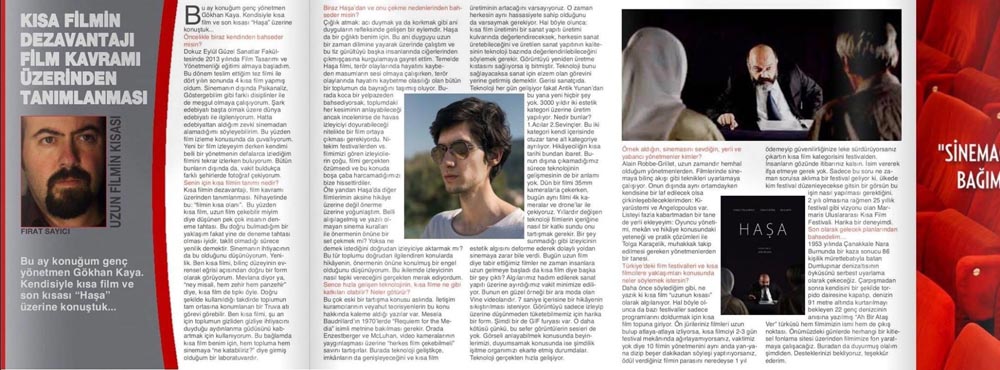
Interviewer: Fırat Sayıcı (Cinedergi & Popular Cinema)
Date: 09.07.2017
This time, we talked with young director Gökhan Kaya about short films and his latest short "Haşa" (God Forbid)...
Fırat Sayıcı: First of all, can you tell us a bit about yourself?
Gökhan Kaya: I started studying Film Design and Directing at Dokuz Eylül Faculty of Fine Arts in 2013. With the thesis film I submitted this term, I have completed 4 short films at the end of four years. Apart from cinema, I try to occupy myself with different disciplines such as Psychoanalysis and Semiotics. I am interested in world literature, especially Eastern literature. In fact, I can say that I cannot get the pleasure I get from literature from cinema. That's why I fail at watching movies too. While trying to watch a new movie, I find myself re-watching a movie by a certain director that I have watched many times. Apart from all these, I take photos in different cities whenever I find time.
F.S: What is the definition of a short film for you?
G.K: The disadvantage of the short film is that it is defined through the concept of film. Ultimately, this is: "the short version of a film". That's why short film is a testing board for many people wondering if they can shoot a feature film. This is an approach I do not find correct, but still, being a testing board is good; as long as it is not an imitation, it means innovation. I think this is what cinema needs. Innovation. I see the short film as a correct form in terms of the universal curve of consciousness. As Rumi says, "like the reed flute (ney), both poison and antidote," short film is just like that. If used correctly, it can serve as a Trojan horse positioned right in the middle of society. For now, I use the short film to swell the instinct for enlightenment that society secretly needs. In this context, short film is a laboratory I entered asking "what can we add?" to both society and cinema.
F.S: Can you talk a bit about 'Haşa' and the reasons for shooting it?
G.K: Screaming: it is an action that develops in the reflex of sudden emotions like feeling pain or fear. 'Haşa' was also a scream for me. I worked on spreading this sudden emotion over a long period of time and tried to edit this shrill noise as if it came out of other people's lungs as well. Basically, while the film 'Haşa' tries to be the voice of the innocents who lost their lives in terror incidents, it also carries the flag of the whole society that has the possibility of losing their lives in terror incidents. If we are talking about a huge spectrum here, a film had to emerge that every segment of society could understand, but if examined, could also satisfy the elite audience. Indeed, most of the viewers who saw our film at festivals etc. really absorbed the film and made us feel that we did not waste our efforts in this regard.
On the other hand, unlike my other films, in 'Haşa' I focused on the proposition rather than the story. Is it blocking the proposition with certain conventional and unwritten rules of cinema? Or is it conveying what you want to say directly to the audience? In such issues that directly concern society, I think the story is an obstacle placed in front of the proposition. I was really curious about how the audience would react in this dilemma.
F.S: What kind of contributions do you think rapidly developing technology can have to short films? What does it take away?
G.K: This is actually a very old topic of debate. There are articles written by communication theorists about this subject. For example, one should look at Baudrillard's text "Requiem for the Media" from the 1970s. There, Enzensberger and McLuhan discuss the argument "everyone should be able to make films" upon the spread of video cameras. Here, we assume that as technology develops, opportunities will expand and short film production will increase. Then we must also assume that everyone has the same sensitivity. Such being the case: if we are going to evaluate short film production in the lane of producing a work of art, we must say that everyone can produce art and the quality of the produced work of art can be evaluated on the basis of technology. If it meets the criterion of reproducing the image, the job is done. If technology will provide this, it means it has fulfilled its essential duty for art. The rest is up to the artist. Technology develops every day, but there is nothing new since Ancient Greece. Production has been made on two aesthetic categories for 3000 years. What are they? 1. Pain 2. Joys. These two categories are divided into thirty sub-categories within themselves. The short history of storytelling consists of this. As long as we cannot go beyond this, the development of technology has no meaning either. While yesterday we shot a film with 35mm cameras, today we shoot the same film with 4k cameras and drones. We need to discuss what contribution the technology changing for years has made to the content of films. Not only did it not offer anything, but it even harmed cinema indirectly by deforming the aesthetic perception of the audience. When did the films we call feature films today start to feel long to people that something else called short film emerged? Our perceptions are castrated, minimizing the time we allocate to a work of art. The best example of this is Vine videos, which were fashionable for a while. It is requested to compress a story into 7 seconds. It is a wonderful form for us to just watch the image and consume it without thinking about it. Now there is also the GIF fury. That is worse because this time the images have no sound either. They have eliminated our hearing organ for now regarding sensing, and our brains regarding understanding the visual. Technology is indeed developing rapidly.
F.S: Who are the local and foreign directors you take as examples and whose cinema you love?
G.K: Alain Robbe-Grillet is one of the directors I have been engaged with for a long time. He tries to adapt techniques like stream of consciousness to cinema in his films. Apart from that, among those I could get ugly if anyone said a word against them while in the same environment: there are Kiarostami and Angelopoulos. Let me add a local one without swelling the list too much: Tolga Karaçelik is one of the directors who must be followed with his talent in actor direction, space and story, and his practical solutions.
F.S: What would you like to say about film festivals in Turkey and their approach to short filmmakers?
G.K: As I said before, unfortunately, short film is perceived as "the short version of the long one". Such being the case, some festivals get into the ball of short film just to fill their programs. If your pre-juries find the films too long and watch them by skipping, if you cannot host the short filmmaker at the festival venue for 2-3 days, if you line up 10 film directors side by side at the same time and make them have 5-minute interviews saying we don't have time, if you stain your reliability by not paying the money for the film you awarded for almost 1 year, remove the short film category from the festival. Let your reputation remain in the eyes of people. There is no need to expose by giving names. Just whenever this question is asked, a festival comes to my mind that whoever is going to organize a festival in the country should go and see how this job should be done. Marmaris International Short Film Festival, which has a vision like a 25-year festival even though it is its 2nd year. It was a wonderful experience.
F.S: Finally, let's talk about future plans...
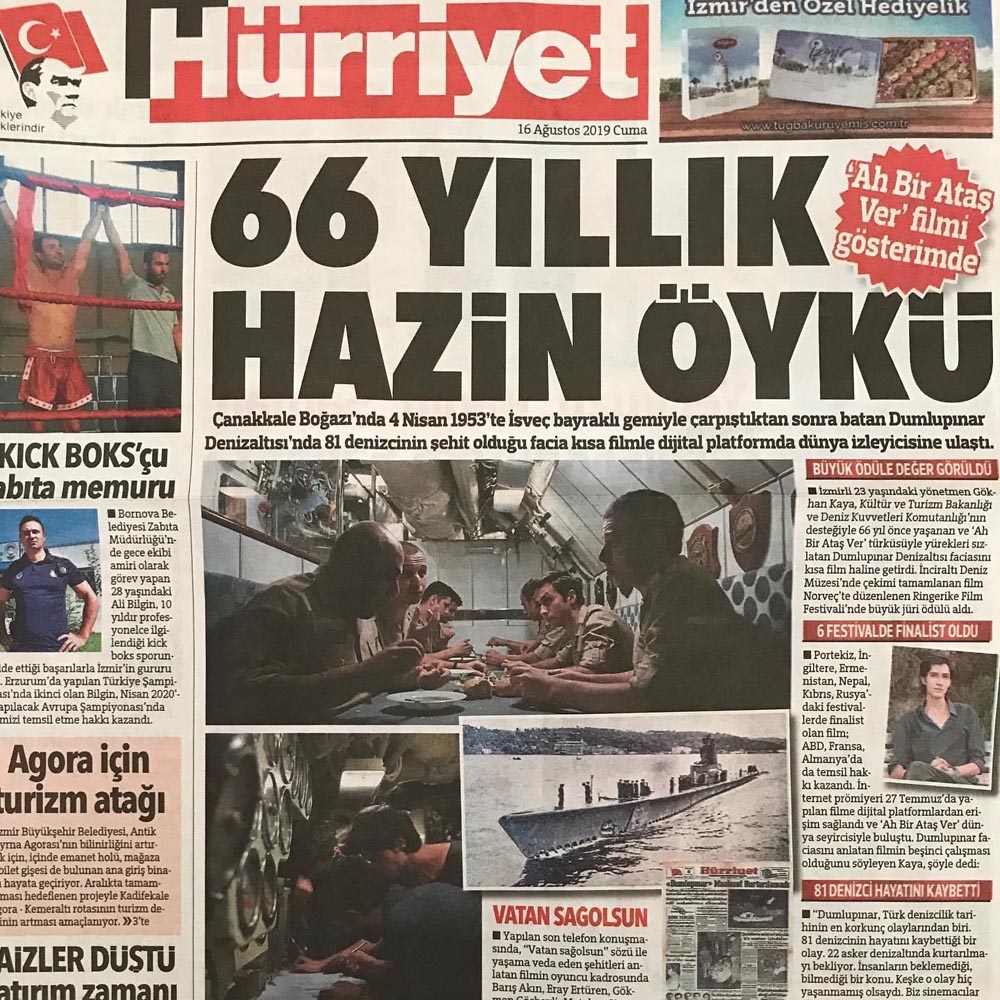
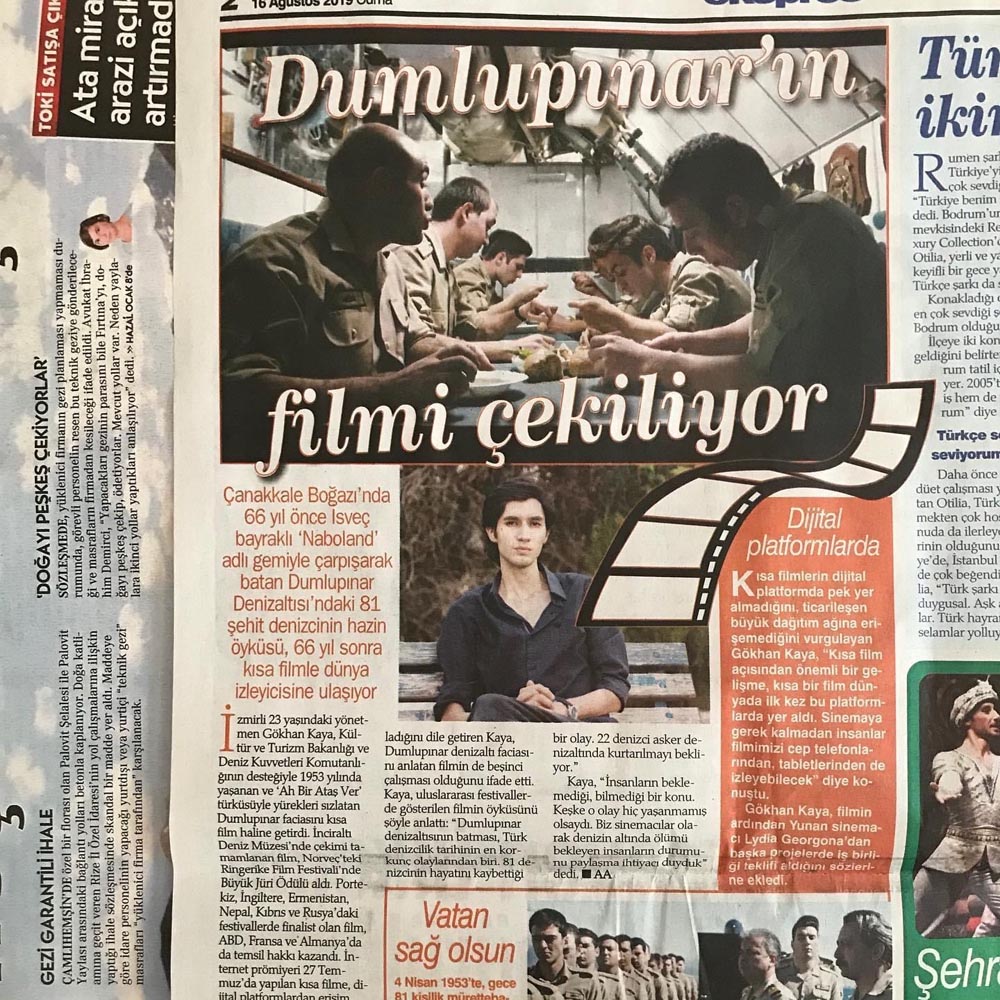
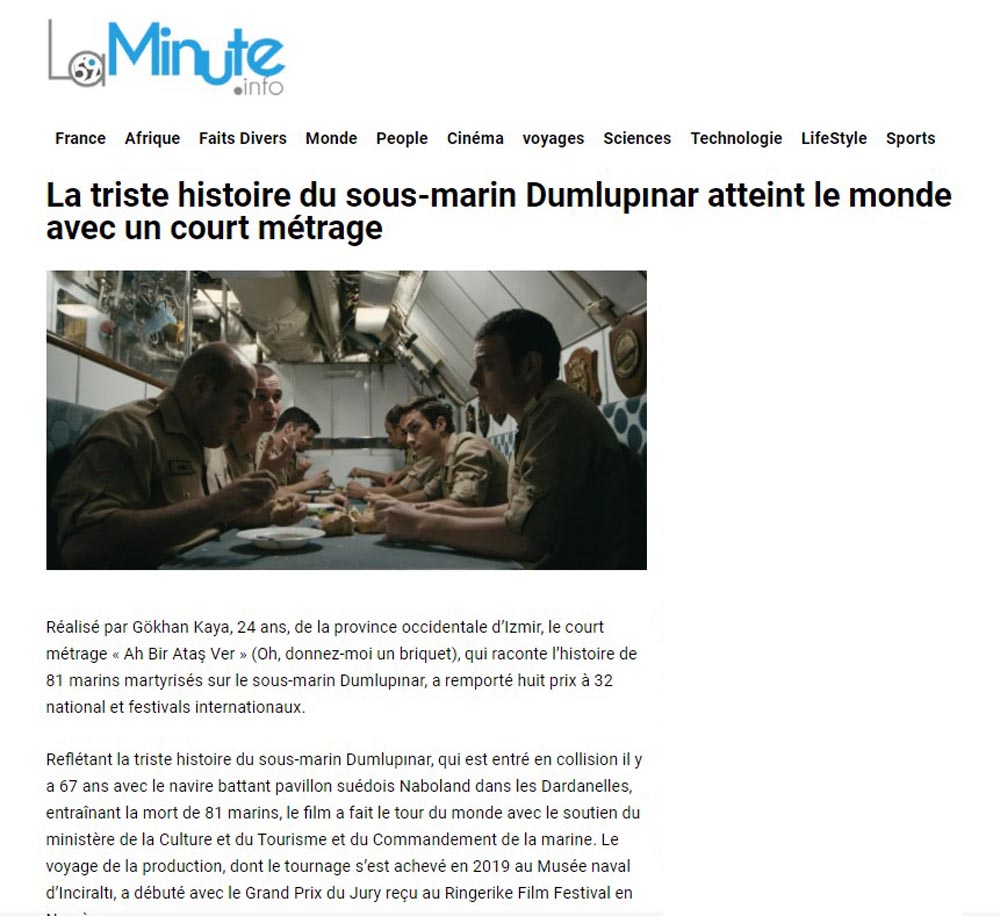
G.K: We will shoot the story of the Dumlupınar submarine, which sank with its 86 crew members as a result of an accident in Çanakkale Nara Cape in 1953, as a loose adaptation. The folk song "Ah Bir Ataş Ver" (Give Me a Lighter), written in memory of the 22 young sailors who somehow locked themselves in the torpedo compartment after the collision and waited to be rescued 91 meters under the sea, is both the name and the starting point of our film. In the coming days, we will try to create funds for our film through any crowdfunding site. Let us announce it from here already. We expect your support, thank you.
KFYD Interview | "Cinema is fundamentally voyeuristic and can never be an ethical form." (2019)
FULL INTERVIEW
Conversation with Gökhan Kaya on Politics, Budgeting, and Cinema Ethics
Interviewer: Seda Özaltan (Association of Short Film Directors)
Date: 04.07.2019
Gökhan Kaya is an educated director who attracted attention with his films 'Haşa' and 'Give Me a Lighter' (Ah Bir Ataş Ver), the latter of which collected numerous awards with a story set in the Dumlupınar submarine that sank in 1953. We conducted an interview with Director Kaya, who does not hesitate to clearly express his political stance in his films, about his last three works.
Seda Özaltan: Hello Gökhan, welcome. Can you tell us a bit about yourself?
Gökhan Kaya: Hello Seda, thank you. I live in Izmir. I am pursuing a master's degree in Film Design at Dokuz Eylül University (DEU) Faculty of Fine Arts. I generally try to run my film projects from Izmir. Apart from that, I am currently busy with my thesis; it is a study on the self-orientalist attitude that is becoming increasingly evident in recent independent Turkish cinema.
S.Ö: How did you decide to study film? How did academic education contribute to your career?
G.K: First of all, I don't think filmmaking is something that can be learned in high schools, universities, or casual cinema courses found around. I remember being quite upset when I didn't get into the cinema department during high school entrance exams. It felt like I missed an opportunity. Of course, when I say "filmmaking" here, I am talking about the issue of producing a qualified work of art. Most institutions think they provide cinema education by showing students how to connect one shot to another and teaching superficial storytelling.
In my opinion, practice or technique should be the last topics to focus on in cinema education. A real cinema education means being able to create satisfactory answers to the question "Why do you need to tell this through a film?". If telling a story through film means discarding/eliminating all other methods, there must be a truly convincing reason beneath it. After all, this—roughly speaking, cinema—means aspiring to create a new universe. Therefore, we must assume that the universe you live in does not satisfy you. It must be an insufficient universe for you. Thus, the universe you create must be of a quality that can transcend this one. How correct would it be to complain about something and then present something worse? That's why you need to have thoughts about the world you live in while constructing a film. These thoughts have nothing to do with statistical accumulations like knowing the dynamic range of a camera. These are important instruments for cinema, but I believe the quality of a film is primarily related to the contact it establishes with thought. I am talking about a thought that can turn cinema into an object of understanding, not just watching.
S.Ö: How many short films do you have?
G.K: We have made 5 short films so far.
S.Ö: Do you have a film that holds a special place for you? Why are you so close to this film?
G.K: "The Trial of a Film" (Bir Filmin Duruşması) became a strange experience for me. At that time, I was thinking, "Do we really need a script, actors, professional cameras, or all those departments cinema dictates to shoot a film?" or "Can a film be made without these?". Upon encountering this idea, the film suddenly became an experimental field for me. I found myself as an actor, and no one other than me knew they were playing a role in the film. I frankly liked that lack of control. A situation where dominance constantly changes hands... nice. A manipulated reality. In this aspect, it winks at both documentary and fiction. Being inter-genre pushes one to think about cinema. For example, Kracauer's idea that one should discover the story rather than trying to design and find it can be discussed on this axis. At the same time, as I gathered from questions after screenings, this film can initiate an ethical discussion because the actors were recorded secretly. It is good to discuss that cinema is fundamentally a "voyeuristic" thing and can never be an ethical form.
S.Ö: 'Haşa' made quite a sound. Let's hear its story somewhat...
G.K: I think it has something to do with us losing our voice. Being able to say a few words, to express an opinion in response to hundreds of people being destroyed in a city square has unfortunately become something that requires courage. Whereas the main goal of terrorist acts is to create exactly this kind of fear and panic in society. At this point, we should be encouraged to speak, not silenced; this is what is logical. The other way serves them; in a sense, it serves terror. I associate the reason for that interest with people wanting to break their silence.
S.Ö: It is a 3-actor film set in a single location. The female actor is your own mother. How was it working with your mother?
G.K: My mother's role in that film was also a mother role. Of course, this is a motherhood role assigned by society. She seems to live mostly by proxy next to her husband. In some shots, she is out of focus and a non-speaking character. When the intended target audience is broad, such agreed-upon characters may be needed. I mean, more caricaturized characters may be needed. I had worked with both my mother and father before. In terms of acting, the fact that they forget the existence of the camera makes my job very easy. That is generally the struggle in such times.
S.Ö: Cemalettin Çekmece fits the film very well. I find the actor continuity very successful. Did you do any special work on this? Also, could you inform us a bit about hosting a professional actor?
G.K: Cemalettin brother was the first professional actor I worked with. That's why I was very excited, and I think this is a dangerous emotion. However, a nice aspect of professional acting is that they can transform this excitement or anxiety on the director into more reassuring and comforting feelings with their experience. Of course, this is also related to Cemalettin brother's professionalism in human relations; it could have been the exact opposite. Therefore, I think it is important to know the actor personally before working with them on these issues. As far as I can see, the role never separates its path from the one wearing it. Expectation in acting is usually in the opposite direction. Most actors think they can only become another character by moving away from themselves. In my opinion, this indicates that they can only be a single character, not more. Going beyond this brings out the forced acting we complain about, which stands out in cinema. When professional acting is mentioned, people roughly think of someone who earns money from this job and whose main profession is this, but the determining factor here is also related to how well the actor can analyze themselves.
S.Ö: We see clearly in both 'Haşa' and 'The Trial of a Film' that you have a political stance. How did such a director emerge from an apolitical generation? What pushes you to make such films?
G.K: If the term "political" is used here in the sense of "partisan," it is useful to discuss this question. Because in 'Haşa' and the other film, the subject is a bomb exploding in the middle of the city. I think there is no need to belong to a certain ideology or to be molded in a certain axis of thought to worry about this. After all, we don't say to ourselves, "Let me go out today and get blown to pieces in Kızılay Square." Fundamentally, this is a situation where our right to live is taken away, and naturally, we react to this. Even looking at it from this angle, it is an evolutionary reflex. Survival instinct. If this is not forming, I think there is a problem. This was the basic motivation that pushed us to shoot these films.
S.Ö: 'Give Me a Lighter' (Ah Bir Ataş Ver), which is among my favorite films of 2018, was shown in many festivals. Where did the awards come from?
G.K: We received our first award from Izmir. Apart from that, awards came from Norway, Istanbul, Ankara, and cities like Uşak, Mersin, Bingöl. The international and domestic festival process continues.
S.Ö: How was the production process? How many days did you shoot the film? Can you describe the set environment a bit, as there is a crowded cast? It's also a period film...
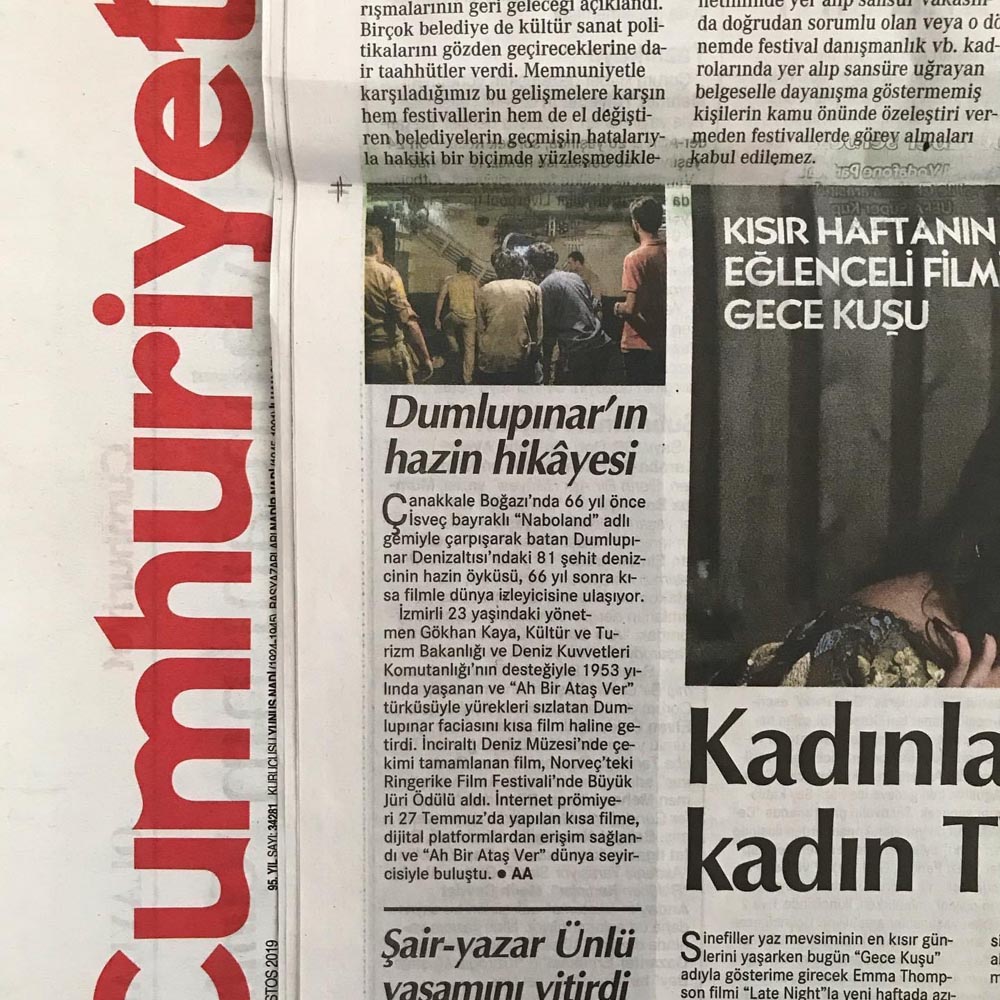
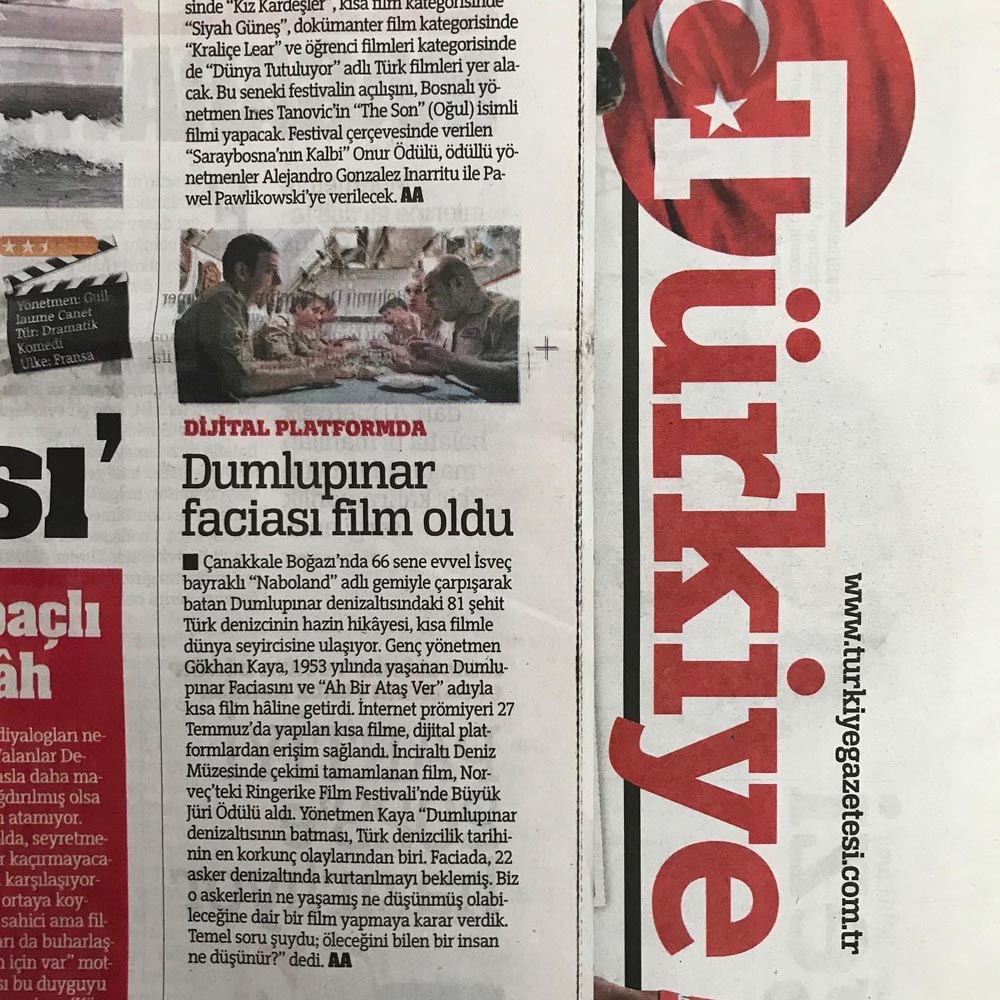
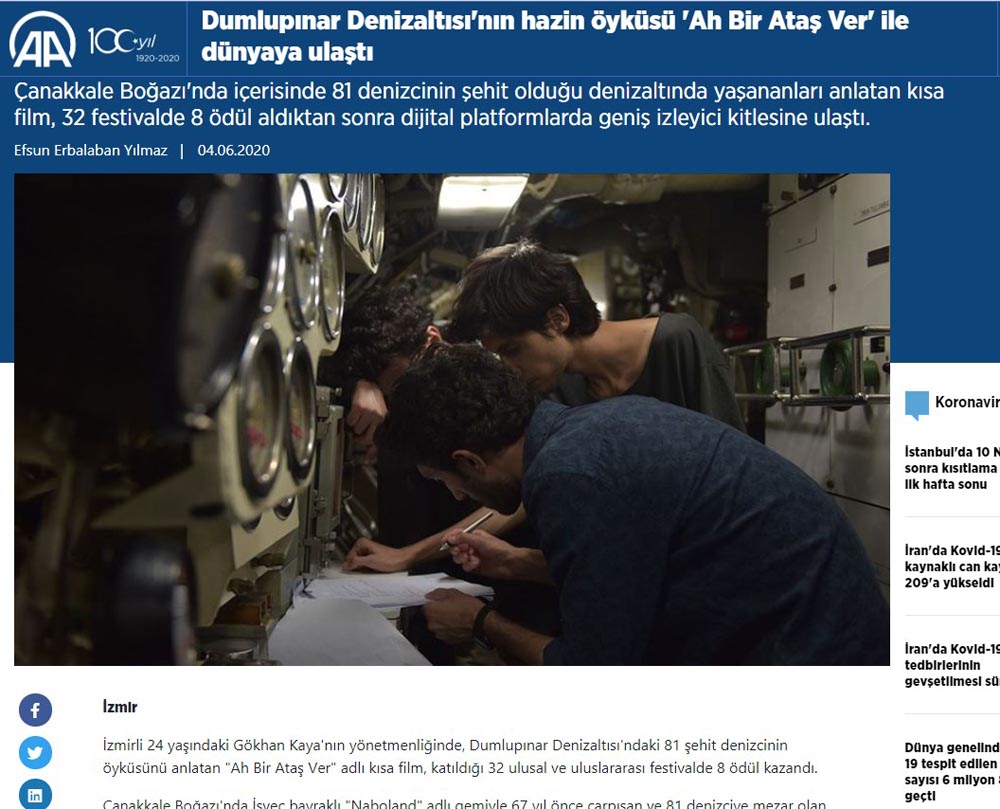
G.K: We shot the film in Izmir inside a real, retired submarine that is now used as a museum. With the support of the Naval Forces Command, it was closed to visitors for 3 days for us, and thanks to this, we were able to do our shooting. It was a crowded set; considering the numbers in front of and behind the camera, I still find the idea of shooting in a submarine strange. However, I like that the location is like one of the characters. That submarine is a living part of the story rather than just a vehicle for it. Regarding the set environment, I know some friends were sneakily planning to deduct 3 days from their mandatory military service! I can say we adapted to the space easily. At one point, someone describing the location of the lights said something like, "Next to the main torpedo, in the sonar room." At that moment, I realized the crew had reached a stage where they could easily cause a diplomatic crisis with the submarine allocated to us.
S.Ö: The most curious question: How much did the film cost, and how did you finance the budget?
G.K: I prefer not to answer the question "how much the film cost" as it causes wrong associations in the minds of people who want to shoot films, but let me tell you how I financed it: By not worrying about the budget at the script stage. This is the reason why most authors cannot film their works. They write according to the budget they have, making it difficult for the film to stand out among others in the lane where it needs to be financed. For example, the mistake most students make is starting with "Let's have 5 actors, one location, because there is no budget." Naturally, at the end of the day, it falls into a position waiting to be financed among scripts designed with the same mindset. However, if one acts more boldly during the writing phase and revises the script according to the budget obtained through that attention-grabbing nature, the film happens. To give an example of the issue I want to underline: when I wrote the script for the last film, we needed a submarine allocated to us, 1 week to spend inside it, and 80 people to work in it. Our budget was zero. Here, it is necessary to create interest, even if artificial, from the pre-production stage.
S.Ö: Your brother Oğuz Han takes on the cinematography in many of your films. So there is a 'Kaya Brothers' situation :) Where does Oğuz Han's interest and technical knowledge come from?
G.K: Oğuz had a technical interest not only in cinema but in many fields from the beginning. His personal enthusiasm and effort in this regard opened the way for cinematography as well. He has a photography background, and this continues. At the same time, he not only does the cinematography of the films but plays an active role at least as much as I do during the script phase and post-production. Actually, at the core of this working together lies intellectual compatibility rather than a blood tie. A project that one of us doesn't feel right about usually doesn't happen. In that sense, we achieved a nice harmony. I don't see any harm in the "Kaya Brothers" issue; of course, we should ask Oğuz's opinion too.
S.Ö: On the ship, the place where the crew sleeps looks quite narrow. How did you shoot in the corridor and bunks?
G.K: The narrowness of the space served the claustrophobic atmosphere we were trying to create, but it also limited cinematographic maneuvers. The corridors are only wide enough for one person to pass. Even a Ronin couldn't be used, monitors couldn't be set up. All equipment was chosen according to the space. I can say Oğuz's solutions saved us here. Apart from that, even though the space was narrow, we decided to work with narrow-angle lenses. In return, we wanted to squeeze the characters into the frame with over-the-shoulder shots. In wider spaces, we cut the electricity and limited the depth of field with a single light source. The space needed to narrow down layer by layer. Under these conditions, the actors' range of motion was also limited, but as I said, it was a constraint that worked in our favor.
S.Ö: When I watched your film, I was reminded of Tolga Karaçelik's 'Ivy' (Sarmaşık). Apart from the theme, only male actors, those remaining on the ship waiting for their rescuers like waiting for Godot caused this association for me. Is there inspiration from 'Ivy'? Do you get comments like this about the film?
G.K: If we look at it as texts written under the framework of waiting for a savior, this theme was frequently processed in Northern European Literature before 'Ivy'. It has consistently been the subject of poetry in that region. Apart from that, there are historical events directly resembling Dumlupınar: like the Kursk disaster in Russia. Considering these, when writing the script, we faced the risk that even the slightest inspiration would evolve into something that has already been frequently processed in originality. That's why we relied entirely on imagination and focused on the part where no one knows what happened inside. There is a situation of waiting for a savior here too, but it is not of the kind that establishes an indirect relationship with other elements like in 'Ivy' or other texts.
S.Ö: I know your interest in literature. In 'Give Me a Lighter', the book the character Nazım reads is Victor Hugo's 'The Last Day of a Condemned Man'. The film's relationship with the book is very clear. The character Bekir already says it openly: "What does a man think before he dies?" Is this questioning the starting point of the film?
G.K: Yes, that was the starting point of the film. When the element of death enters the equation, what changes occur in relationships like person-soldier, person-state? The story of Dumlupınar was a story chosen upon this discourse. Let me state that it mediated the discourse. I don't see any harm in characters doing this openly. Because the Dumlupınar disaster is an event where the dramatic beginning, middle, and end are already known. If the dramatic structure of the film leads the audience to the discourse in a healthy way, this openness does not bother me. I think the thing the audience should focus on there is the question itself. We are talking about the last day of a condemned man. Hugo established a dramatic structure even in the title. Just reading the title makes one hungry to fill in the before and after. Like "Lines Behind the Last Picture I Took While Smiling at My Executioner".
S.Ö: From what other fields do you feed yourself and your films besides literature?
G.K: Lately, I have been focusing more on theoretical texts. Since most of these texts are didactic, they are always in a distant relationship with cinema. But they can also penetrate directly into the essence of that form.
S.Ö: In your opinion, which is the most painful phase of the short film production process? What do you do to get through this process more comfortably?
G.K: In cinema, too many tools intervene between the work and the director. A simple idea like visualizing a thought goes through so many various stages that after a while, the thought leaves its place to another thought, and the director can find themselves dazed just trying to visualize something. I think one needs to be meticulous at this point. It is necessary to act with the awareness that we don't just have pen and paper in front of us and to keep the initial motivation alive at every stage. In my opinion, this situation can make the film production process a painful situation in itself.
S.Ö: Can we get the names of 2 local and 2 foreign short films that you would say "Definitely watch"?
G.K: "Lettres De Femmes" by Augusto Zanovello and "Gray Umbrella" by Mohammad Poustindouz are two interesting short films I watched recently. From the local ones, Eren Rüya’s "Eclipse of Reason" (Akıl Tutulması) and Çağrı Güreş’s film named "The Sea" (Deniz) must be seen.
S.Ö: Considering the films made in recent years, is there a feature film you would say "I wish I had shot that"?
G.K: I guess I haven't watched a film that excited me that much in recent years.
S.Ö: Are new projects on the way? When will we be able to watch your new film?
G.K: New projects are on the way, the files are completely ready. In the coming period, we will deal with the financing of these projects...
S.Ö: How did you hear about KFYD? Do you follow the association's activities?
G.K: The association was established at a point where we felt the need for such a community and were thinking about what could be done, and I joined immediately. I follow the activities, of course.
S.Ö: How can our readers reach you? Are you active on social media?
G.K: I am relatively active on social media. Those who wish can reach me from there.
S.Ö: Would you like to say something finally?
G.K: Finally, my school, Dokuz Eylül University Faculty of Fine Arts, is being forced to move to a building designed for the rectorship with the claim that it is "not earthquake-resistant," citing a report no one has seen yet. If this move happens, established departments like Film Design or Performing Arts will face a danger of complete disqualification as suitable educational conditions cannot be provided. We are in favor of retrofitting the building if possible and continuing education on the same campus. As students, we are trying to attract public attention to this issue. I hope this helps a bit too. Thank you very much, best regards...
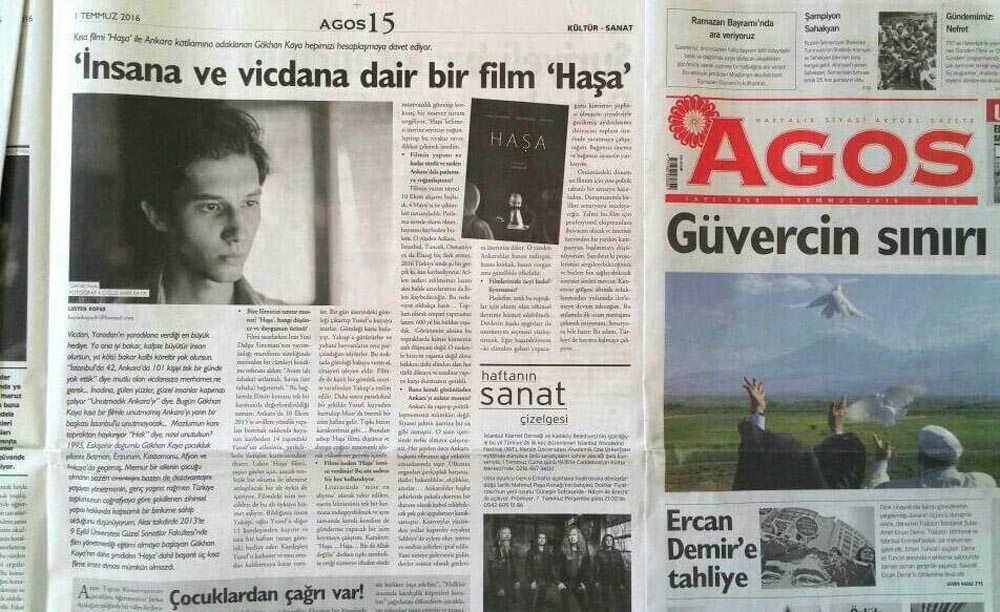
AGOS Newspaper | 'Haşa': A Film About Humanity and Conscience (2016)
INTERVIEW
"Contrary to appearances, no one is anyone's sworn enemy in these lands."
Interviewer: Lusyen Kopar
Guest: Gökhan Kaya
Gökhan Kaya, director of the film 'Haşa' (God Forbid), which depicts the aftermath of the Ankara Massacre, speaks on conscience, society, and cinema.
"Conscience is the greatest gift the Creator has given to the created... Today Gökhan Kaya hasn't forgotten Ankara with a short film; tomorrow someone else won't forget Istanbul." — Lusyen Kopar
Lusyen Kopar: Can you introduce your film to us? Which thoughts and emotions is 'Haşa' a product of?
Gökhan Kaya: While designing the film, I took a sentence from the manifesto-like text published by the Iranian New Wave Cinema as my reference: "The common people should understand it, the elite should appreciate it." In this context, when the subject of the film is evaluated on a single layer; it consists of the family of 14-year-old Yusuf, who lost his life in the bombing attack targeting civilians in Ankara, communicating with the authorities.
However, 'Haşa' also contains a sub-story that can only be understood by selective eyes if watched with a theological reading. As you know, Jacob (Yakup) favors his son Joseph (Yusuf)... The brothers throw Joseph into a well and bring his bloody shirt to Jacob. In the film, a bloody shirt is delivered to Yakup by the authority. Paradoxically, Yusuf escapes the well and becomes an important figure. Just like our character.
L.K: Why did you title the film 'Haşa'? This word is used only once.
G.K: I tried to give it a name that is termed 'mise en abyme' in literature. When the character says, "Haşa... Haşa (God forbid)... We are not God either," he displays a terrible narcissistic attitude under the guise of false humility, referring to the class he symbolizes. I wanted to focus the audience on the word 'Haşa' and draw attention to this hypocritical attitude.
L.K: How long did the production take, and why did you focus on the explosion in Ankara?
G.K: The writing process began on the evening of October 10th. Wherever the explosion happens, we are the ones who lose our lives. In the Turkey of 2016, it is a fact that we are losing blood. We need to be treated urgently. This treatment is quite simple: As a society, we need to empathize. Contrary to appearances, no one is anyone's sworn enemy in these lands. Therefore, we must stand against any dictatorship or totalitarian structure that takes away an individual's right not just to live, but even to die.
L.K: Can you describe Ankara from your own perspective?
G.K: It is impossible to live in Ankara and not become politicized. Politics has descended upon the city like a fog. You try to breathe inside that fog. First of all, Ankara carries the heavy burden of being the capital. The organs of the country are naked in front of you; ministries, embassies, monuments... Wherever you go, the state stares at you concretely. That's why people of Ankara are sometimes uneasy, sometimes cowardly, sometimes tired, but usually angry.
L.K: What do you aim for with your films?
G.K: My goal is to serve the mental revolution that is now essential for these lands. To confront the authoritarian voter with the state's apparatus of oppression. I am a proponent of independent cinema and independent politics.
I want to shoot my first feature film. Even its script is ready: A man trying to survive in Turkey...
Newspaper Archive(Gallery)
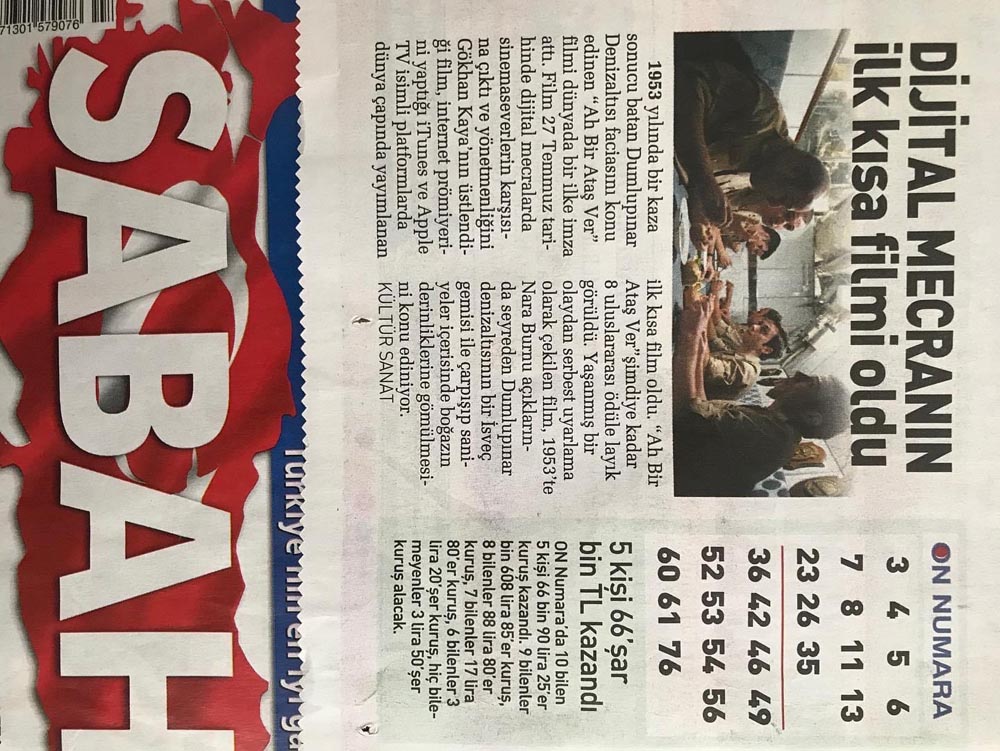
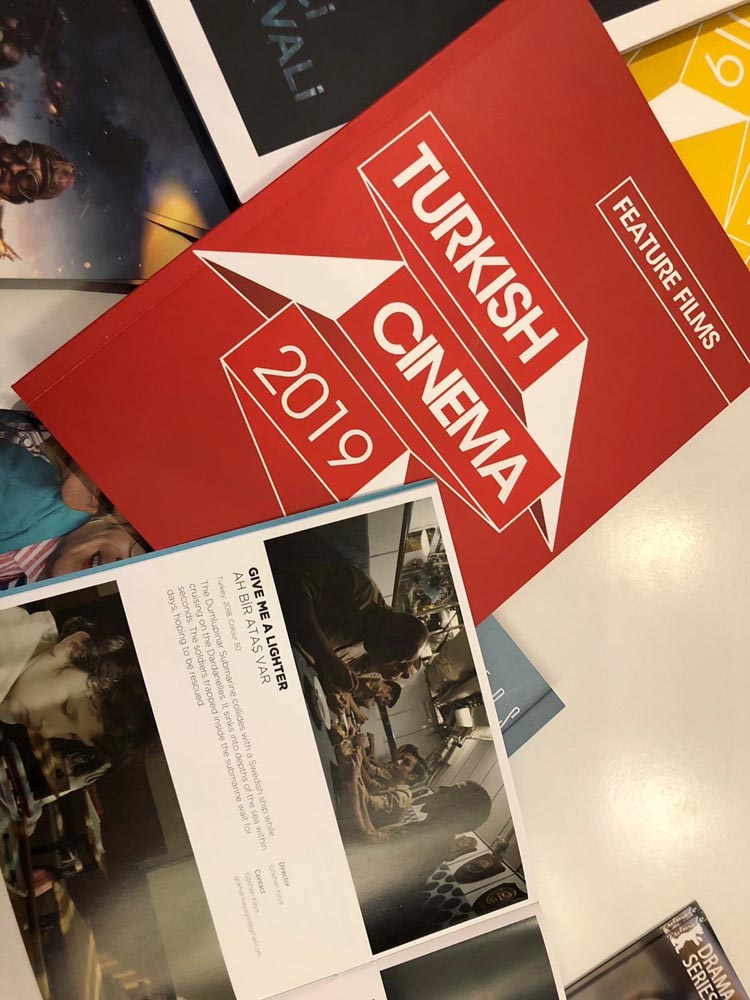
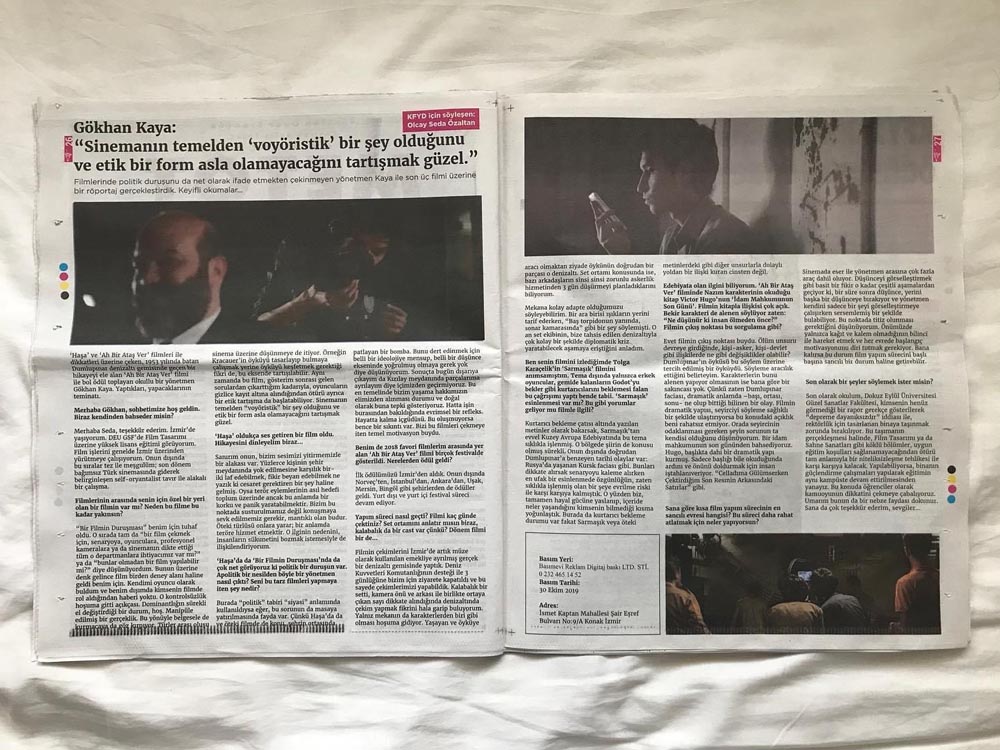
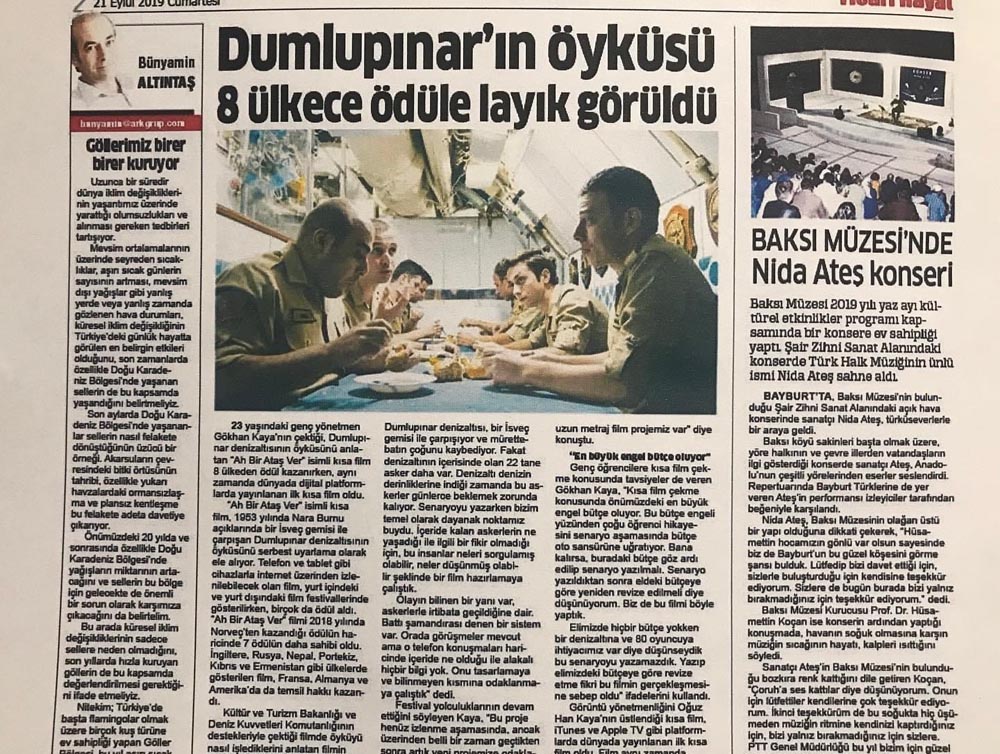
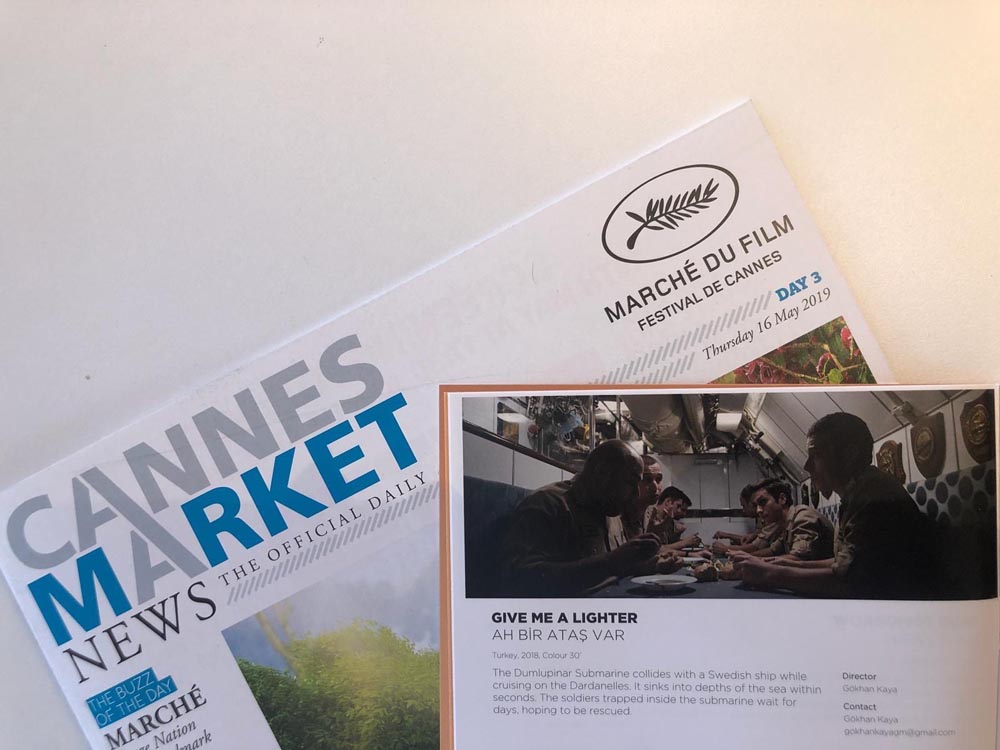
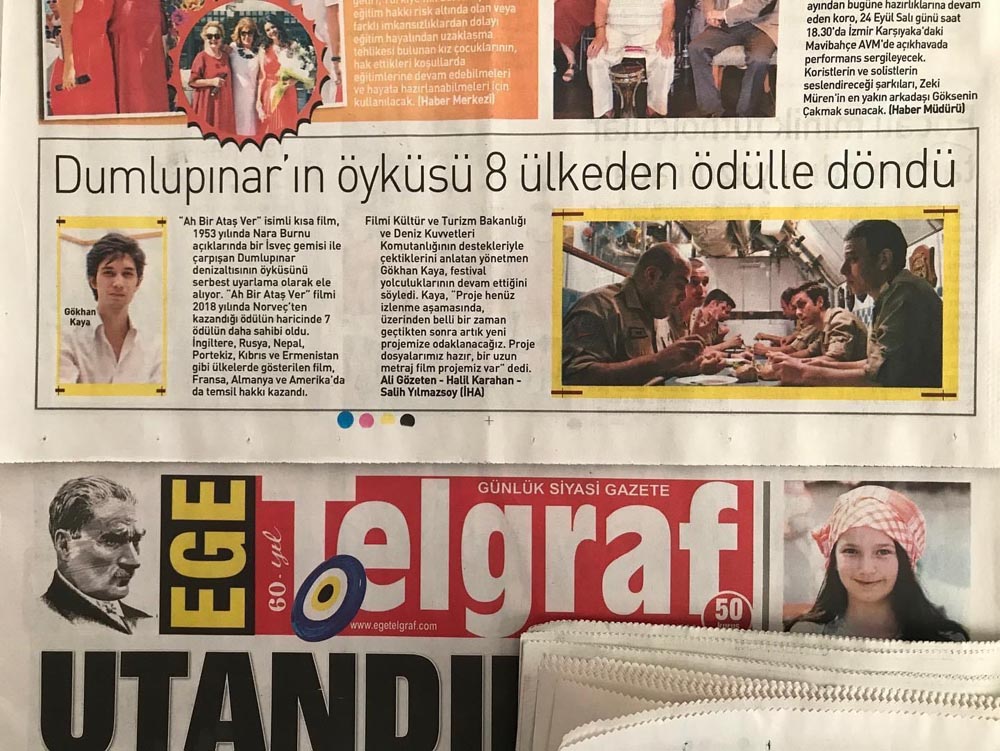
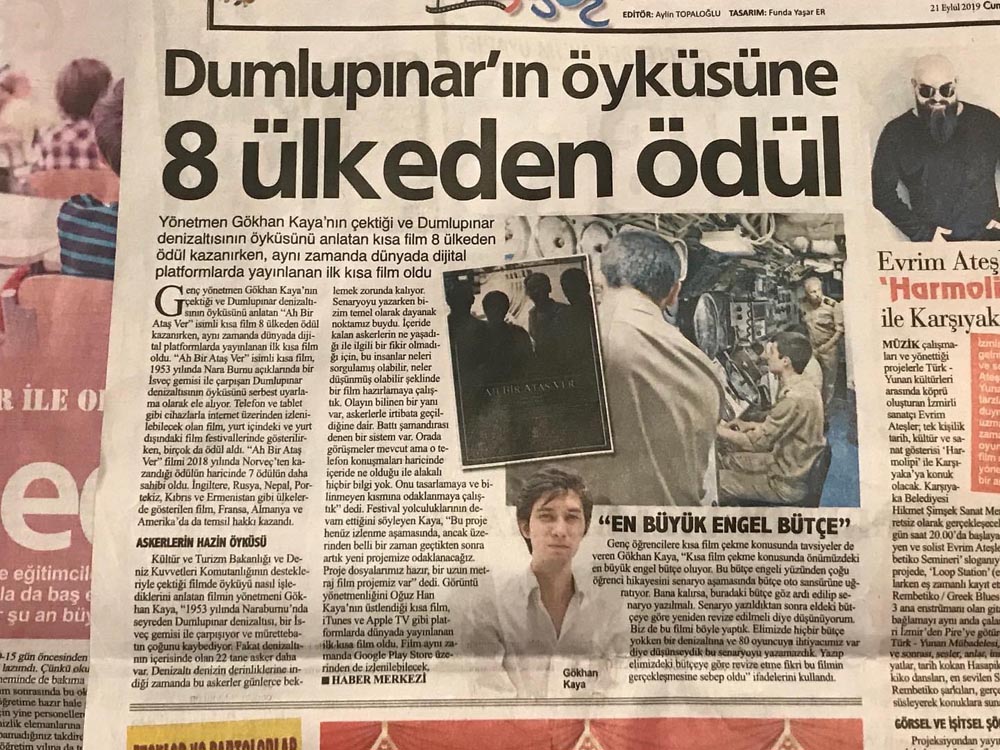
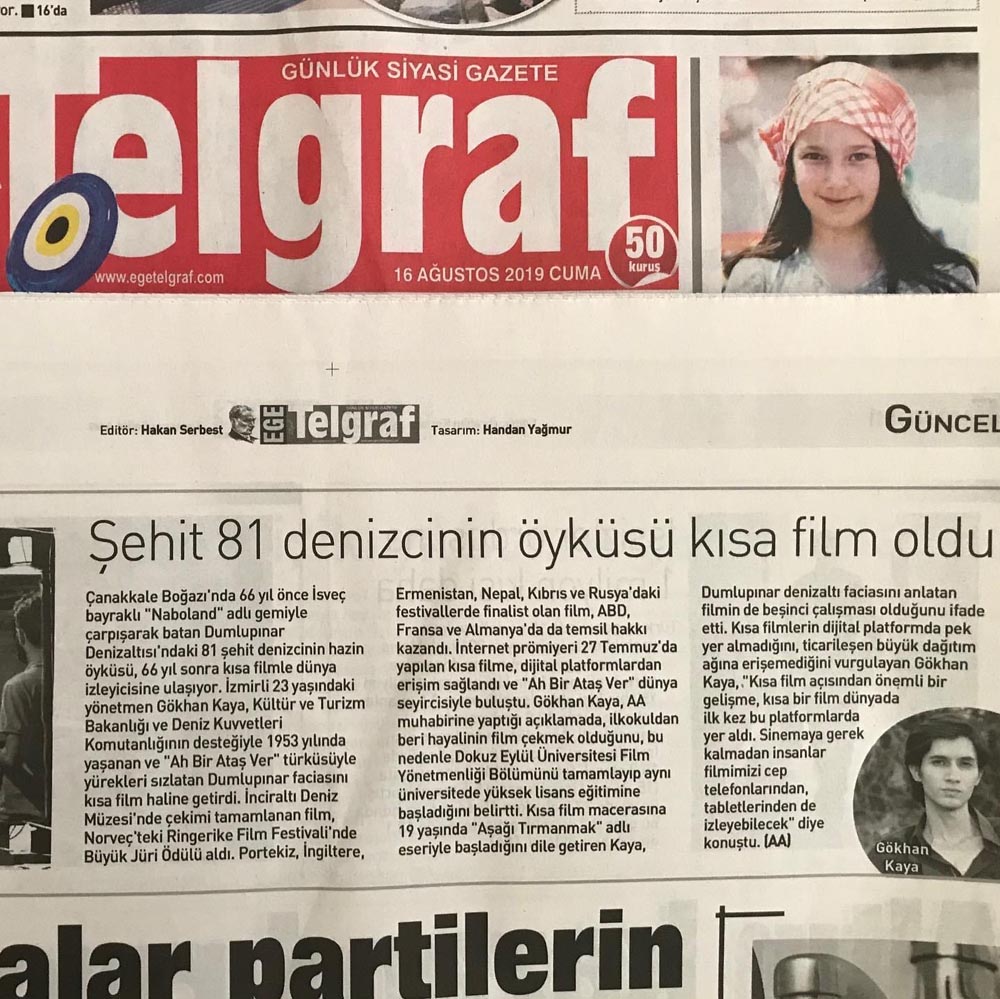
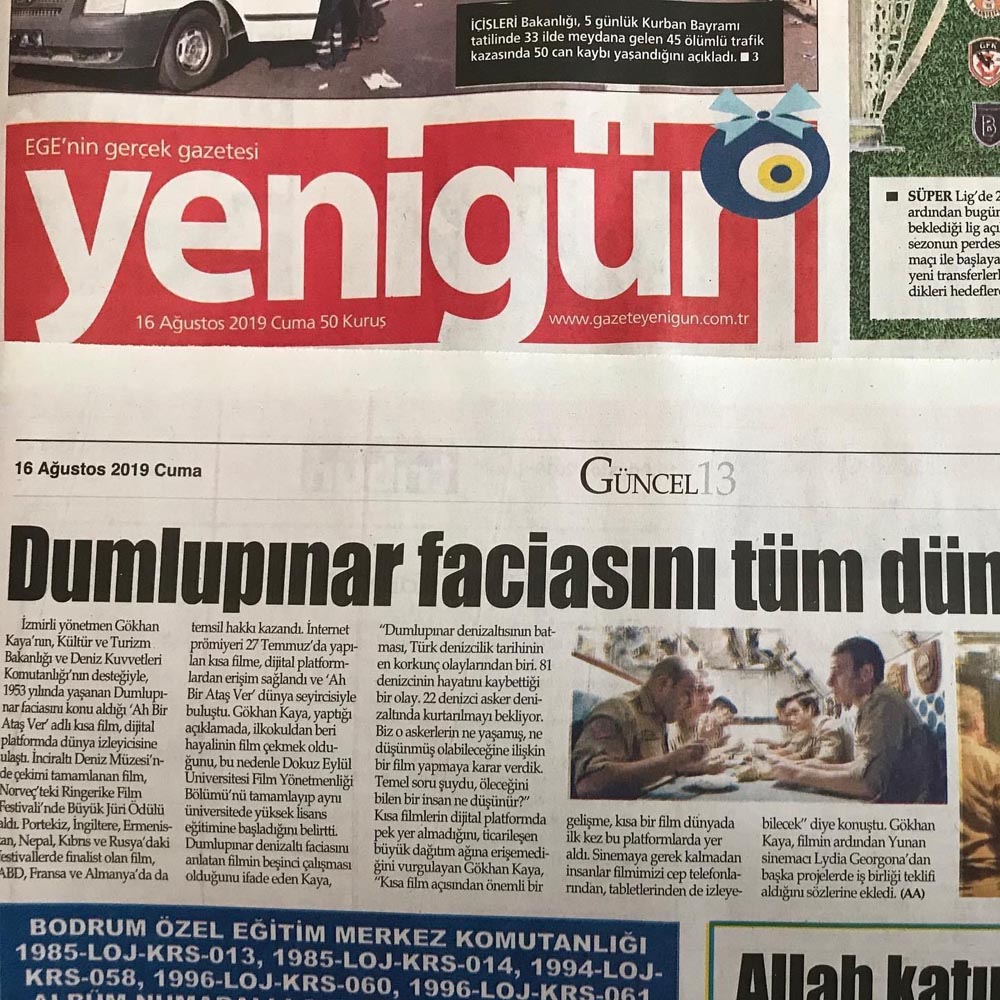
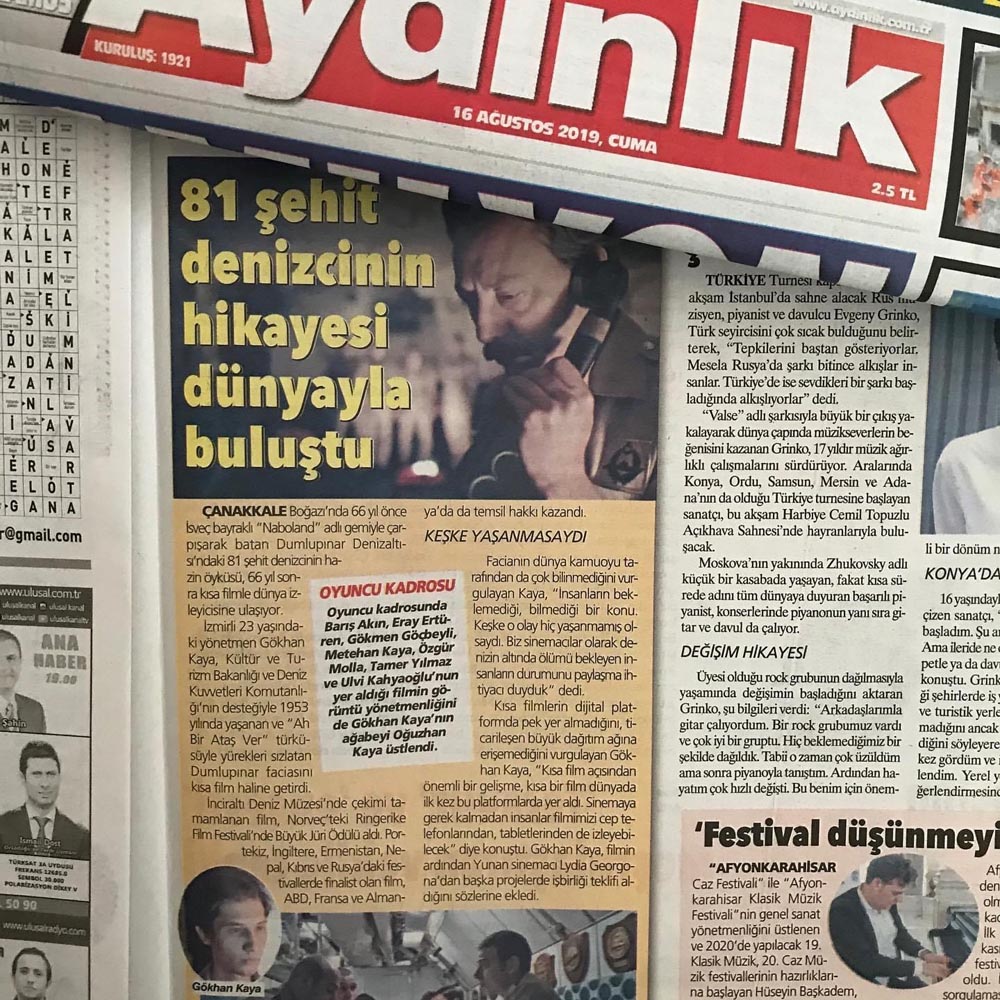
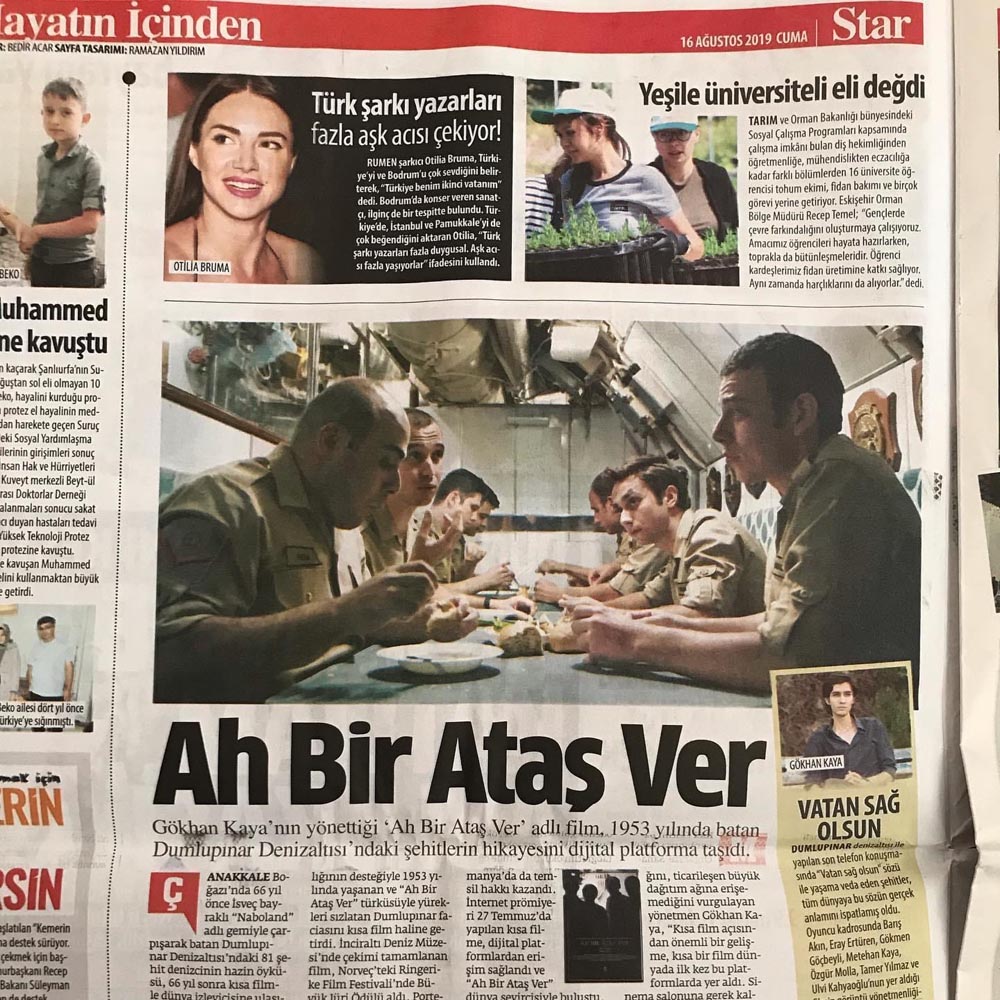
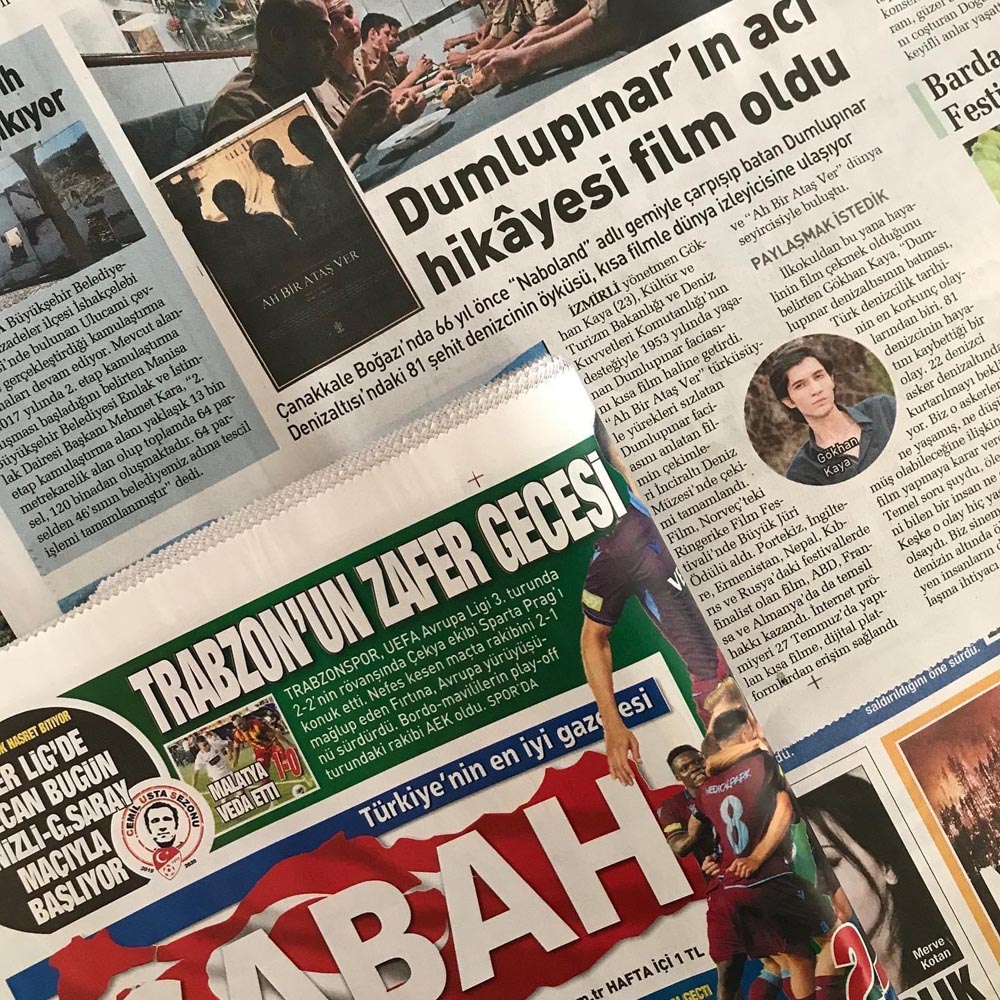
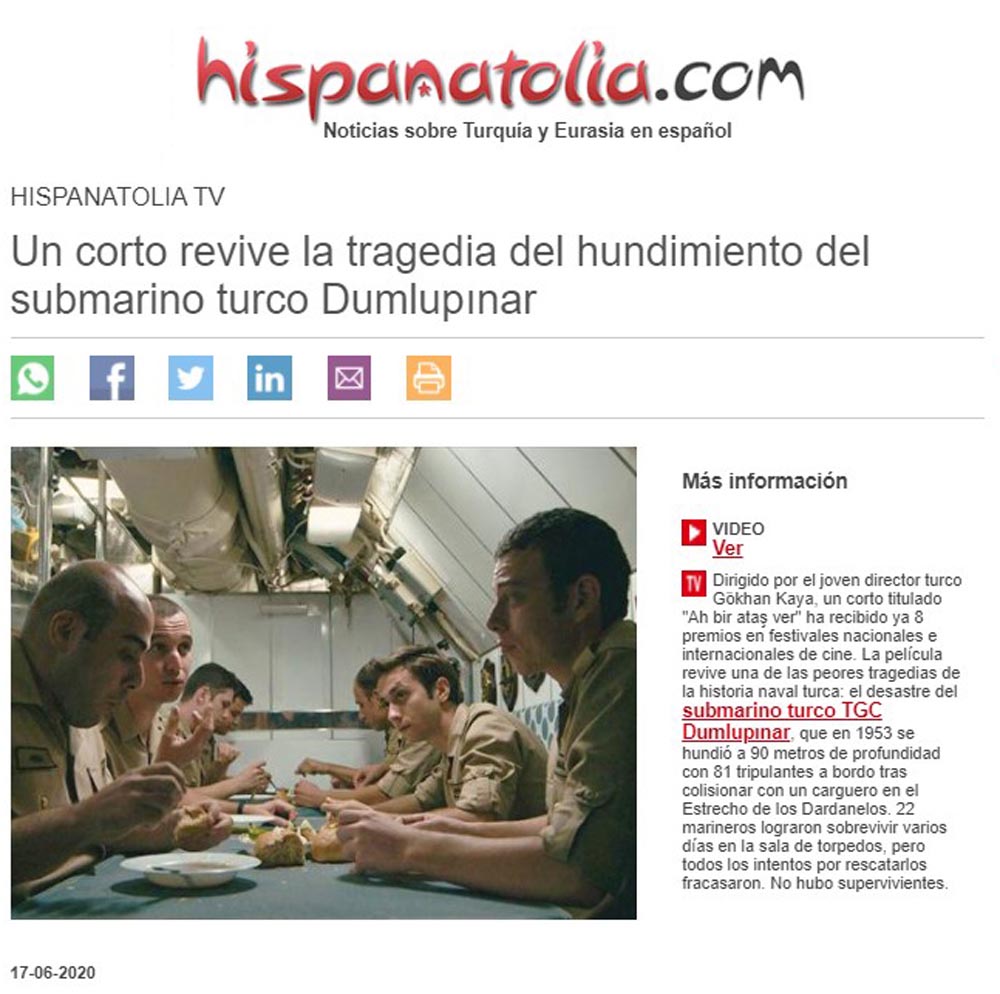
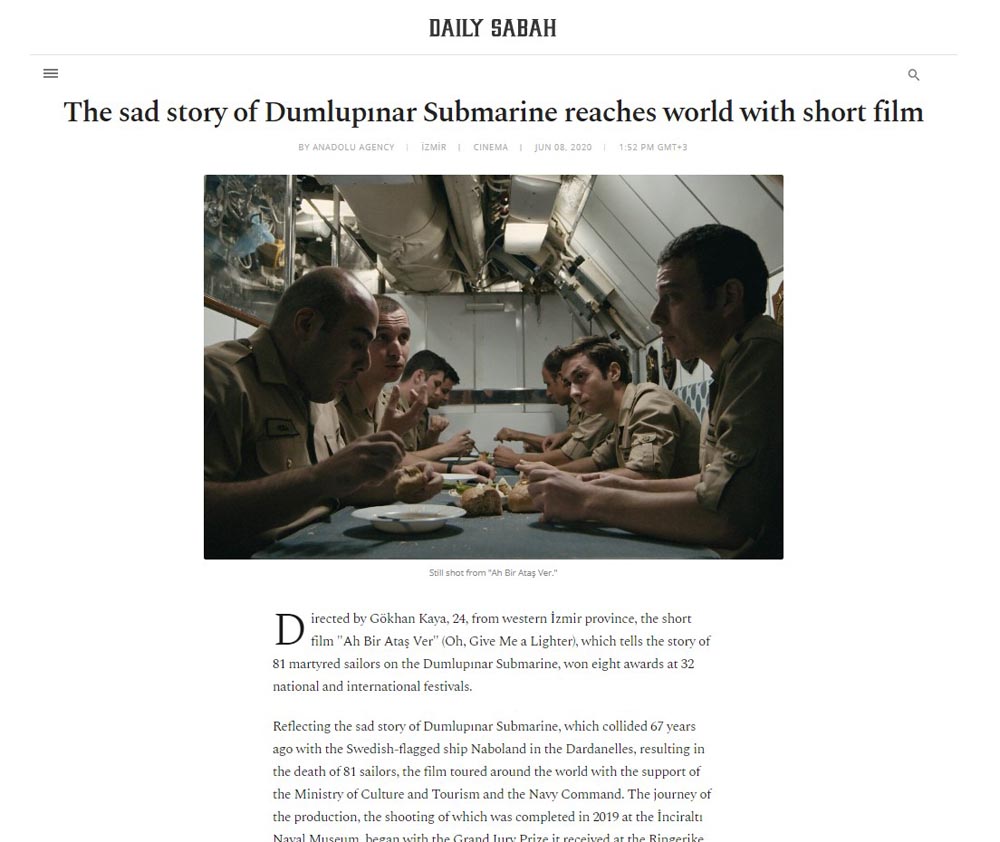
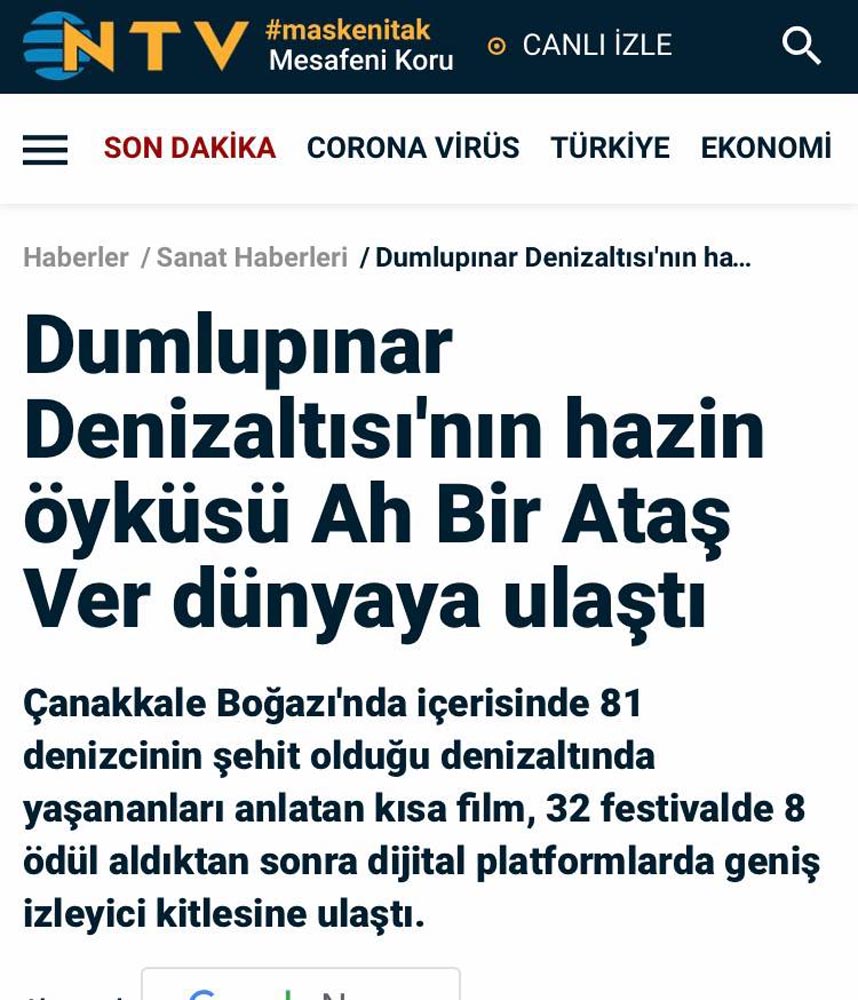
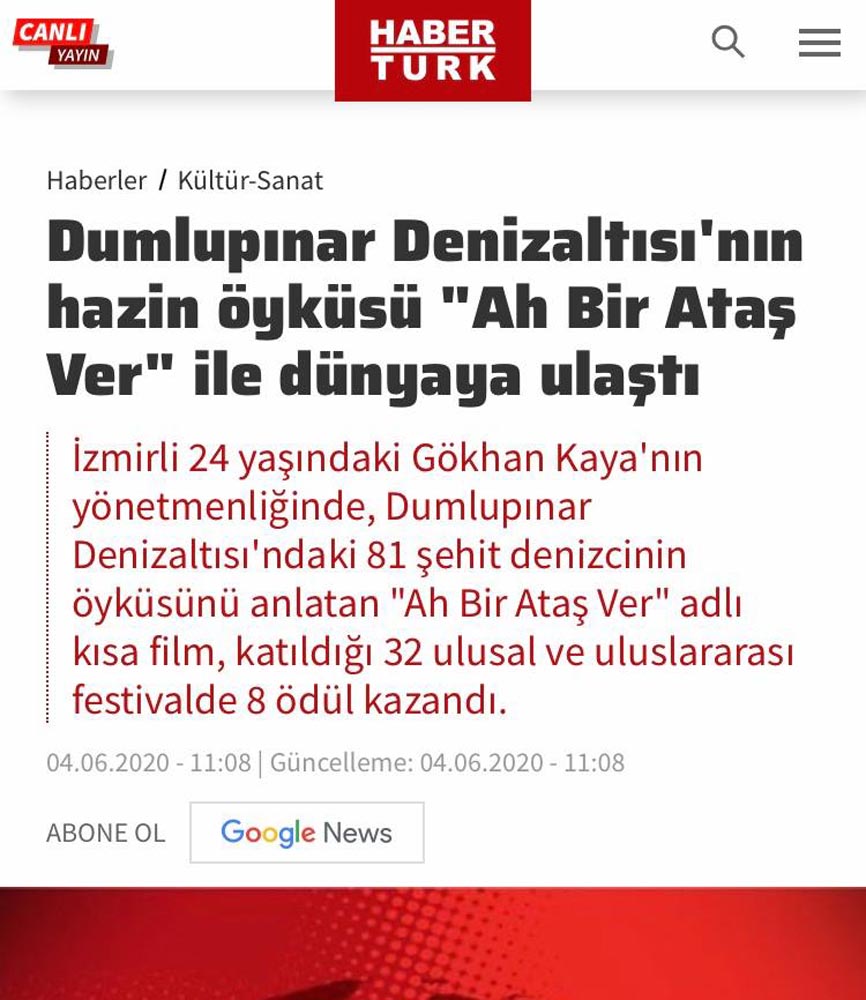
Videos & Q&A's
João Gonzalez on "Give Me a Lighter"
Director's Commentary
Élise Carret Reviews "Give Me a Lighter"
Animation Director / Paris
Laura Candela on "Give Me a Lighter"
Review from Golden Apricot FF
Lydia Georgana Interview
Casting Director on the Film
Eitan Herman & Avigail Graetz
Thoughts on "Give Me a Lighter"
Q&A: Sweden Unga Magasinet
Interview with Gökhan Kaya
Interview: BBFO
Bornova Film Office Talk
University Talk: DEU History Society
Gökhan & Oğuz Han Kaya
DEFOT Photography & Cinema Talk
Interview
Talk: Izmir Medical Chamber
Q&A Session (2019)
Festival Talk: MUKFF 2019
Marmaris Int. Short Film Festival
Q&A: "The Trial of a Film"
4. UMKFF
Q&A: "Give Me a Lighter"
GLFF Festival Talk